
Have you noticed your dog shaking its head more than usual, scratching its ears, or rubbing its head against furniture? These behaviours may seem harmless at first, but they can be signs of an ear infection.
Dog ear infections are a common veterinary concern and can cause itching, redness, pain, and discomfort. Without appropriate treatment, the problem may become more serious or keep returning.
For dog owners in Mississauga, understanding the early signs of an ear infection can help you recognize when your pet needs veterinary attention.
At Erin Centre Animal Hospital, we understand how uncomfortable ear problems can be for dogs. Recognizing the symptoms early and identifying the underlying cause are important steps toward protecting your dog’s ear health.
What Is an Ear Infection in Dogs?
A dog ear infection occurs when the ear canal becomes inflamed, often because of an overgrowth of bacteria or yeast. The medical term for inflammation of the outer ear canal is otitis externa.
Infections can affect one or both ears. Some dogs experience a single episode, while others develop recurring problems related to allergies, moisture, parasites, or the structure of their ear canals.
If left untreated, an outer ear infection can sometimes extend into the middle or inner ear, potentially affecting hearing and balance.
This is why persistent ear irritation should not be ignored.
Common Symptoms of Dog Ear Infections

Dogs cannot tell us when their ears hurt, but changes in their behaviour can provide important clues. Watch for these common signs:
1. Frequent Head Shaking
Repeated head shaking is one of the most noticeable signs of an ear problem. Your dog may shake its head throughout the day because of itching, irritation, or discomfort inside the ear canal.
2. Scratching or Rubbing the Ears
A dog with an ear infection may frequently scratch one or both ears using its back paws. You may also notice your dog rubbing its head against carpets, furniture, or the floor.
3. Redness and Swelling
Look for redness around the ear opening or inside the visible part of the ear. Swelling and sensitivity may also develop as inflammation increases.
4. Unpleasant Ear Odour
An unusual or strong smell coming from your dog’s ears can indicate an infection or excessive buildup of debris. A persistent odour should be checked by a veterinarian.
5. Ear Discharge or Excess Wax
Some dogs develop brown, yellow, or dark discharge inside their ears. The appearance of the discharge alone cannot reliably identify whether the problem is caused by yeast, bacteria, or another condition.
6. Pain or Sensitivity Around the Ears
Your dog may pull away, whine, or become uncomfortable when you touch its ears or head. Some dogs may also become less active or irritable because of the discomfort.
If you notice one or more of these symptoms, arrange a veterinary examination to identify the cause.
What Causes Ear Infections in Dogs?

Several factors can contribute to ear infections. Understanding the underlying cause is important because treating the infection alone may not prevent it from returning.
Bacterial and Yeast Overgrowth
Bacteria and yeast can multiply when the normal environment inside the ear canal becomes disrupted. This may happen when the ear becomes inflamed, moist, or affected by another underlying condition.
Allergies
Environmental allergies and food-related sensitivities can cause inflammation of the skin and ear canals. Dogs with ongoing allergies may experience repeated ear infections.
Moisture Inside the Ears
Bathing, swimming, or frequent exposure to moisture can contribute to ear irritation in some dogs. Moisture may create conditions that encourage microbial overgrowth.
Ear Mites and Parasites
Ear mites are tiny parasites that can cause intense itching and dark discharge. They are more commonly seen in puppies and can also spread between animals.
Foreign Objects
Grass seeds, plant material, and other small objects can enter a dog’s ear canal and cause irritation or inflammation. Sudden head shaking or discomfort after outdoor activities may indicate a foreign object.
Ear Shape and Hair Growth
Dogs with long, floppy ears, narrow ear canals, or significant hair growth around their ears may be more susceptible to certain ear problems. However, ear infections can affect dogs of any breed.
Identifying these contributing factors helps veterinarians recommend more appropriate treatment and reduce the chances of recurrence.
How Are Ear Infections Diagnosed?
If your dog shows signs of an ear infection, a veterinary examination is important. Different ear conditions can produce similar symptoms, so treatment should be based on an accurate diagnosis.
A veterinary assessment may include:
Physical Ear Examination
The veterinarian checks the outer ear for redness, swelling, discharge, irritation, and signs of pain.
Otoscope Examination
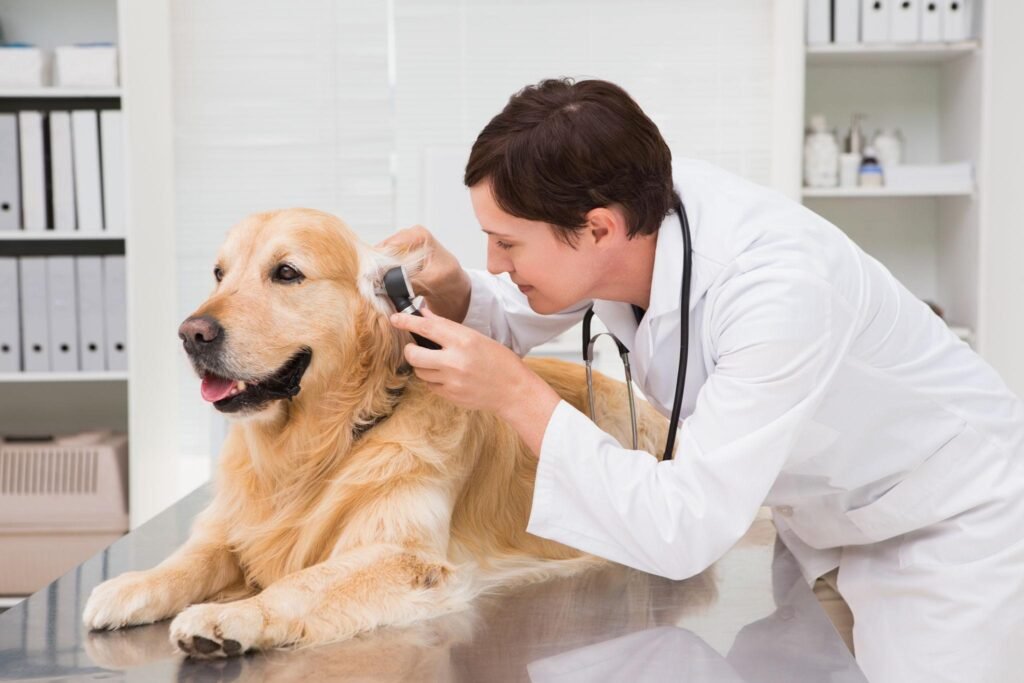
An otoscope allows the veterinarian to examine the ear canal and, when possible, assess the eardrum. This helps identify inflammation, foreign objects, and other abnormalities.
Ear Swab and Microscopic Testing
A sample of ear discharge may be collected and examined under a microscope. This can help identify yeast, bacteria, inflammatory cells, or parasites.
Additional Diagnostic Testing
For recurring or complicated infections, further testing, such as bacterial culture or imaging, may be recommended depending on the findings.
The results help determine the underlying problem and guide the treatment plan.
Treatment Options for Dog Ear Infections
The right treatment depends on the type of infection, its severity, and whether another condition is contributing to the problem.
Your veterinarian may recommend one or more of the following:
Medicated Ear Drops: Prescription ear drops may contain antibacterial, antifungal, and anti-inflammatory ingredients, depending on the diagnosis.
Professional Ear Cleaning: Removing excess discharge and debris can help improve ear hygiene and allow prescribed medication to work effectively.
Oral Medication: Some complicated or severe infections may require medication by mouth.
Allergy Management: If allergies are contributing to recurring ear infections, managing the underlying allergy is an important part of treatment.
Follow-Up Examinations: A recheck may be needed to confirm that the infection has resolved and the ear canal is recovering.
Always follow your veterinarian’s instructions regarding medication, cleaning frequency, and treatment duration. Stopping treatment too early may allow the problem to return.
When Should You Visit a Vet for a Dog Ear Infection?
You should arrange a veterinary appointment if your dog frequently shakes its head, scratches its ears, develops an unpleasant ear odour, or has visible discharge or redness.
Some symptoms require more urgent attention. Contact a veterinarian promptly if you notice:
Severe ear pain or significant swelling.
Bleeding or discharge containing pus.
Persistent head shaking or intense scratching.
Sudden hearing changes.
A head tilt or difficulty maintaining balance.
Unusual eye movements, facial weakness, or difficulty walking.
Head tilt, loss of balance, and coordination problems can indicate that a deeper part of the ear or the nervous system is affected. These signs need urgent veterinary assessment.
Early evaluation can help prevent complications and reduce unnecessary discomfort.
How to Help Prevent Ear Infections in Dogs
Although not all ear infections can be prevented, regular ear care can help you notice potential problems early.
Here are some practical tips for dog owners:
Check Your Dog’s Ears Regularly: Look for redness, unusual odour, excess wax, and discharge.
Keep Ears Dry: After bathing or swimming, gently dry the visible outer ear area.
Use Veterinarian-Approved Ear Cleaners: Ask your veterinarian which cleaning product is suitable for your dog’s ears.
Avoid Overcleaning: Cleaning too frequently or unnecessarily can irritate the ear canal.
Manage Allergies: If your dog has recurring ear problems, discuss possible allergies with your veterinarian.
Attend Regular Veterinary Checkups: Routine examinations can help identify ongoing ear and skin concerns.
Avoid inserting cotton swabs deep into the ear canal. Do not use alcohol, hydrogen peroxide, or homemade cleaning mixtures unless specifically recommended by your veterinarian.
Dog Ear Infection Care at Erin Centre Animal Hospital in Mississauga
Ear infections can be uncomfortable for dogs, especially when itching, inflammation, and discharge interfere with their daily activities.
At Erin Centre Animal Hospital, we provide veterinary medical care for dogs and cats in Mississauga and surrounding communities.
Our veterinary team understands that ear irritation can have several possible causes. A proper examination helps identify the problem and determine the most appropriate treatment for your dog’s needs.
Whether your dog is experiencing a first-time ear infection or recurring ear irritation, our team can help assess the symptoms and discuss suitable diagnostic and treatment options.
If you notice changes in your dog’s ears, do not wait for the discomfort to become worse. Contact our hospital to arrange a veterinary assessment.
Frequently Asked Questions About Dog Ear Infections
How do I know if my dog has an ear infection?
Common signs include frequent head shaking, scratching, redness, swelling, unpleasant odour, and ear discharge. A veterinary examination is needed to confirm the cause.
Can a dog ear infection go away on its own?
Some mild irritation may improve, but a true ear infection often requires appropriate veterinary treatment. Ignoring the symptoms can allow inflammation or infection to worsen.
How long does it take for a dog ear infection to heal?
Recovery time depends on the type and severity of the infection. Some uncomplicated infections improve within a few weeks, while chronic or complicated cases may require longer treatment and follow-up examinations.
Are certain dog breeds more prone to ear infections?
Yes. Dogs with long, floppy ears, narrow ear canals, or certain skin and allergy conditions may be more susceptible. However, any dog can develop an ear infection.
Can I clean my dog’s infected ears at home?
Do not attempt to clean an infected or painful ear without veterinary guidance. The wrong cleaning product or technique may cause additional irritation, particularly if the eardrum is damaged.
When is a dog ear infection an emergency?
Severe pain, significant swelling, bleeding, a sudden head tilt, loss of balance, unusual eye movements, or difficulty walking require prompt veterinary attention.
Book an Appointment at Erin Centre Animal Hospital
Your dog’s ear health is an important part of its overall well-being. If you notice frequent scratching, head shaking, unusual odours, or ear discharge, professional veterinary care can help identify the cause and guide appropriate treatment.
At Erin Centre Animal Hospital, we are committed to supporting the health and comfort of pets in Mississauga.
Contact our team to arrange an examination for your dog.