
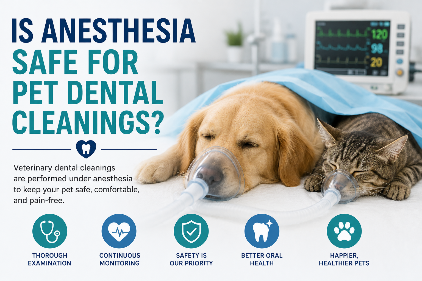
Maintaining your pet’s oral health is an important part of their overall well-being. Just like humans, dogs and cats can develop plaque, tartar, gum disease, and painful tooth infections if their teeth are not properly cared for. Professional dental cleanings play a vital role in preventing these problems and keeping your pet healthy.
One of the most common concerns pet owners have is whether anesthesia is safe during a dental cleaning. It’s understandable to feel nervous about your pet being placed under general anesthesia. However, modern veterinary medicine has made anesthesia safer than ever before. With comprehensive health assessments, advanced monitoring equipment, and individualized anesthetic protocols, the risks are significantly reduced for most healthy pets.
If your veterinarian has recommended a professional dental cleaning, understanding why anesthesia is necessary and how it protects your pet can help you make an informed decision.
Yes, anesthesia is generally safe for pet dental cleanings when performed by a qualified veterinary team. Before the procedure, your pet undergoes a physical examination and, in most cases, blood tests to evaluate their overall health. During the dental cleaning, trained professionals continuously monitor heart rate, blood pressure, oxygen levels, breathing, and body temperature. General anesthesia allows veterinarians to safely clean below the gumline, perform dental X-rays, and treat painful dental disease without causing stress or discomfort to your pet.
Key Takeaways
- General anesthesia allows veterinarians to perform a complete and pain-free dental cleaning.
- Every pet receives an individualized anesthetic plan based on age, health, and medical history.
- Continuous monitoring throughout the procedure significantly improves safety.
- Professional dental cleanings help prevent painful periodontal disease and other health complications.
- The health risks associated with untreated dental disease are often greater than the risks of properly managed anesthesia.
Why Is Anesthesia Necessary for Pet Dental Cleanings?
Many pet owners wonder why their dog or cat cannot simply have their teeth cleaned while awake. Unlike humans, pets cannot understand instructions to remain still during a dental procedure. Even the calmest pet may react unexpectedly when sensitive areas of the mouth are touched.
Professional dental cleanings involve much more than removing visible tartar from the surface of the teeth. Veterinarians must carefully clean beneath the gumline, where harmful bacteria accumulate and periodontal disease often begins. This part of the procedure would be uncomfortable and unsafe without anesthesia.
General anesthesia allows the veterinary team to perform a complete oral examination, thoroughly clean every tooth, take dental X-rays when necessary, and treat hidden dental problems without causing pain and unnecessary stress.
More importantly, attempting a dental cleaning on an awake animal introduces significant physical risks. Anesthesia doesn’t just make dental cleaning stress- and pain-free; it also protects the pet from possible injuries that could occur due to the pet’s resistance if they are not under the effect of anesthetics.
Veterinary dental instruments are sharp, and even the calmest pet will naturally flinch or pull away when a sensitive area is touched. Anesthesia ensures your pet remains completely still, preventing accidental cuts to the tongue, gums, or cheeks, and allowing the veterinary team to work with absolute precision.
How Safe Is Anesthesia for Dogs and Cats?
Thanks to advances in veterinary medicine, anesthesia has become remarkably safe for both dogs and cats. Modern anesthetic medications are carefully selected based on each pet’s unique needs, including their age, breed, weight, medical history, and overall health.
Although no medical procedure is completely without risk, serious anesthetic complications are uncommon when appropriate safety protocols are followed. Veterinary teams take every precaution to minimize risks before, during, and after the procedure.
For healthy pets, the benefits of treating painful dental disease generally outweigh the small risks associated with anesthesia.
How Veterinarians Reduce Anesthesia Risks
Veterinary hospitals follow strict safety protocols to ensure every dental procedure is performed as safely as possible.
Before anesthesia is administered, your veterinarian performs a comprehensive physical examination to evaluate your pet’s heart, lungs, hydration status, and overall health. This helps identify any underlying medical conditions that may require adjustments to the anesthetic plan.
Most pets also undergo pre-anesthetic blood testing. These laboratory tests assess liver and kidney function, blood sugar levels, red and white blood cell counts, and electrolyte balance. The results help determine whether your pet can safely process anesthetic medications.
Once your pet is ready for the procedure, an individualized anesthesia plan is created specifically for them. During the dental cleaning, trained veterinary professionals continuously monitor vital signs, including heart rate, blood pressure, oxygen saturation, respiratory rate, carbon dioxide levels, and body temperature. This constant monitoring allows immediate adjustments whenever necessary, ensuring your pet remains stable throughout the procedure.
Why Dental X-Rays Are Important
Many dental problems develop below the gumline where they cannot be seen during a routine examination. Tooth root infections, fractures, bone loss, and abscesses often remain hidden until advanced imaging is performed.
Because pets are completely still under anesthesia, veterinarians can safely obtain detailed dental X-rays that reveal problems invisible to the naked eye. Detecting these issues early allows treatment before they become more painful or expensive to manage.
Are Senior Pets Safe Under Anesthesia?
A common misconception is that older pets should never undergo anesthesia. In reality, age alone is not a disease. Many senior dogs and cats safely undergo dental procedures every year.
Older pets may require additional blood work or diagnostic testing before anesthesia, but these precautions allow veterinarians to tailor the anesthetic protocol to their specific health needs. In many cases, treating painful dental disease significantly improves an older pet’s comfort, appetite, and overall quality of life.
What Happens During a Professional Dental Cleaning?
A professional dental cleaning begins after your pet has been safely anesthetized and connected to monitoring equipment. Your veterinarian performs a complete oral examination before removing plaque and tartar from every tooth, including below the gumline.
If necessary, dental X-rays are taken to evaluate the roots and surrounding bone. Teeth that are severely damaged or infected may require extraction to relieve pain and prevent further complications. Once cleaning is complete, the teeth are polished to help reduce future plaque accumulation.
Throughout the entire procedure, your pet remains closely monitored until they have safely recovered from anesthesia.
What Is Recovery Like?
Most pets recover quickly after a professional dental cleaning. They may be sleepy or quieter than usual for the remainder of the day, but many return to their normal routine within 24 hours.
If tooth extractions were performed, your veterinarian may prescribe pain medication and recommend feeding soft food for several days. You’ll also receive instructions for ongoing home dental care, including brushing, dental chews, or other products that help maintain oral health between professional cleanings.
What Happens If Dental Disease Is Left Untreated?
Dental disease is more than just bad breath. As bacteria spread beneath the gums, they can damage the supporting structures around the teeth, leading to pain, loose teeth, and infection.
Over time, bacteria from severe periodontal disease may enter the bloodstream and potentially affect major organs such as the heart, liver, and kidneys. Pets with advanced dental disease may also experience difficulty eating, weight loss, chronic discomfort, and behavioral changes.
Routine dental care helps prevent these complications and supports your pet’s long-term health.
Frequently Asked Questions
Is anesthesia necessary for pet dental cleanings?
Yes. General anesthesia allows veterinarians to safely clean below the gumline, perform dental X-rays, and thoroughly examine your pet’s mouth with extreme precision and without causing pain, stress, or injuries.
Is anesthesia safe for older dogs and cats?
In many cases, yes. Senior pets can safely undergo anesthesia when appropriate health screenings and monitoring protocols are followed. Your veterinarian will tailor the anesthetic plan to your pet’s individual needs.
How long does a dental cleaning take?
Most professional dental procedures take between 30 minutes and two hours, depending on the severity of dental disease and whether extractions are required.
Will my pet be in pain after the procedure?
Most pets experience little discomfort following a routine dental cleaning. If extractions are performed, pain medications will be prescribed to ensure a comfortable recovery.
How often should my pet have a professional dental cleaning?
The frequency varies depending on your pet’s breed, age, and oral health. Many pets benefit from professional dental cleanings every one to two years, while others may require more frequent care.
Conclusion
Professional dental cleanings performed under general anesthesia are one of the safest and most effective ways to protect your pet’s oral health. Modern anesthetic techniques, comprehensive pre-procedure evaluations, and continuous monitoring have made these procedures safer than ever before.
Ignoring dental disease can lead to chronic pain, tooth loss, serious infections, and even health problems affecting other organs. Early diagnosis and professional treatment help prevent these complications while improving your pet’s comfort and quality of life.
If you’ve noticed bad breath, swollen gums, difficulty eating, or visible tartar on your dog’s or cat’s teeth, schedule a dental examination with your veterinarian. A professional assessment can help determine whether dental cleaning is needed and ensure your pet receives the safest, most appropriate care.