Spay or neuter surgery is a common procedure for dogs and cats, however it is still normal for pet owners to have questions before their pet goes under anesthesia. Knowing what to expect can help you prepare your pet, understand the recovery process, and recognize when you should contact your veterinarian.
At Erin Centre Animal Hospital, spay and neuter procedures begin with a pre-surgical health assessment and include careful monitoring during surgery and recovery. Our veterinary team provides personalized guidance based on your pet’s age, breed, health, and lifestyle.
Whether you have a puppy, kitten, adult dog, or cat, here is what to know before and after spay or neuter surgery.
What Is Spay or Neuter Surgery?
Spaying and neutering are surgical procedures that prevent dogs and cats from reproducing.
Spaying is performed on female pets and involves removing the reproductive organs responsible for pregnancy. Neutering, also called castration, is performed on male pets and involves removing the testicles.
Both procedures are performed under anesthesia, with veterinary monitoring throughout the procedure. Spaying and neutering prevent unwanted litters and can provide certain health and behavioural benefits.
The appropriate timing is not the same for every pet. Factors such as breed, size, age, sex, health, and lifestyle can influence the recommendation, so it is best to discuss timing with your veterinarian rather than relying on a single age for every dog or cat.
Why Do Veterinarians Recommend Spaying and Neutering?
There are several reasons a veterinarian may recommend spay or neuter surgery.
Preventing Unwanted Pregnancies
Spaying and neutering prevent reproduction and can help reduce unwanted litters.
Supporting Reproductive Health
Spaying eliminates the possibility of pregnancy and can reduce the risk of certain reproductive conditions. Neutering prevents testicular cancer and may reduce some reproductive health concerns.
The potential health benefits can depend on the pet and the timing of the procedure. Your veterinarian can explain the expected benefits and potential considerations for your individual pet.
Reducing Some Hormone-Related Behaviours
Neutering may reduce behaviours such as roaming, urine marking, and fighting in some male pets. Spaying prevents heat cycles along with the heat behavior.
However, spaying or neutering should not be viewed as a guaranteed solution for every behaviour problem. Behaviour can have many causes, and your veterinarian can help determine what may be contributing to a specific concern.
Before Spay or Neuter Surgery: How to Prepare
Preparation is an important part of a safe surgical experience.
Schedule a Pre-Surgical Examination
Before surgery, your veterinarian will assess your pet’s overall health and determine whether they are fit for anesthesia and surgery.
Erin Centre Animal Hospital begins the surgical process with a health assessment and may recommend blood testing to help identify underlying health concerns that could affect anesthesia or surgery.
Follow Your Veterinarian’s Feeding Instructions
Your veterinary team will tell you when your pet should stop eating or drinking before surgery.
These instructions can vary depending on your pet and the planned procedure, so follow the instructions provided by your veterinary team rather than general advice found online.
Tell Your Veterinarian About Medications
Let your veterinarian know about any medications, supplements, or other treatments your pet is receiving.
Also mention any recent changes in:
Appetite
Vomiting or diarrhea
Energy levels
Coughing or abnormal breathing
Urination
Bowel movements
Behaviour
Even seemingly minor changes can be useful information before anesthesia.
Prepare a Comfortable Recovery Area
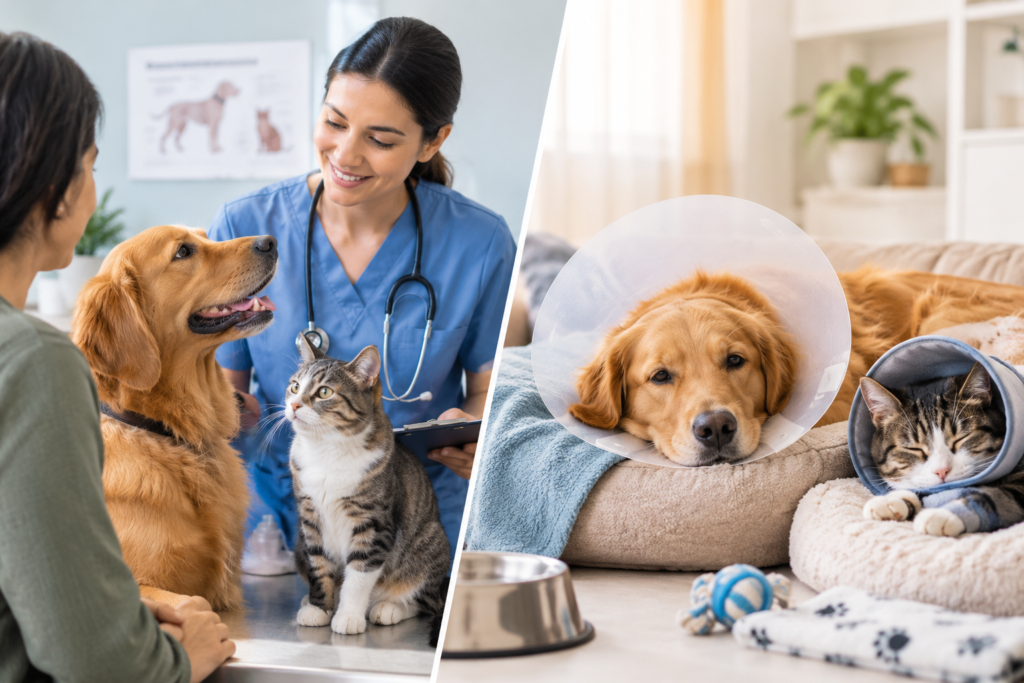
Before bringing your pet home, prepare a quiet, clean area where they can rest.
Keep food and water easily accessible, and make sure the area is away from stairs or situations where your pet may be tempted to jump, run, or play.
In multiple pet house holds, it’s always better to separate the other pets from the one who just underwent surgery. Keeping a recovering pet separated from housemates is essential for a smooth and safe healing process. Even the best-behaved housemates can accidentally compromise a pet’s recovery through normal daily interactions.
What Happens on the Day of Surgery?
Although each veterinary hospital may have its own protocols, spay or neuter surgery generally involves several stages.
1. Admission and Health Assessment
Your pet is admitted and checked before the procedure.
The veterinary team reviews their health information and confirms that they are ready for surgery.
2. Anesthesia
Your pet receives anesthesia, so they remain unconscious and do not experience the surgical procedure.
Modern veterinary anesthesia involves individualized protocols and monitoring designed around the patient’s needs.
3. Surgery
The veterinarian performs the appropriate surgical procedure using sterile surgical techniques.
Spaying and neutering are different procedures, so the surgical approach and recovery can vary between male and female pets.
4. Recovery and Monitoring
After surgery, your pet is monitored as they recover from anesthesia.
At Erin Centre Animal Hospital, surgical care includes anesthesia monitoring and post-operative observation before your pet goes home.
What to Expect After Spay or Neuter Surgery
It is common for pets to be sleepy or less active after anesthesia and surgery.
Your pet may:
Sleep more than usual
Have a temporarily reduced appetite
Move more slowly
Seem quieter than normal
Need extra rest
Your veterinary team should provide specific discharge instructions for your pet.
If your pet is extremely difficult to wake, seems unusually weak, or you are concerned about their recovery, contact your veterinarian promptly. Pets should be monitored carefully after anesthesia.
How to Care for Your Pet’s Surgical Incision
Checking the incision regularly is an important part of recovery.
Look for changes such as:
Increasing redness
Significant swelling
Bleeding
Discharge
Opening of the incision
Do not apply creams, disinfectants, or other products to the incision unless your veterinarian specifically recommends them.
If you notice something that concerns you, contact your veterinary team rather than waiting for the problem to resolve on its own. Monitoring surgical wounds and following the veterinary team’s instructions are important parts of post-operative care.
Prevent Your Pet from Licking the Incision
One of the biggest challenges during recovery is preventing your pet from licking or chewing the surgical site.
Your veterinarian may recommend a protective cone or another appropriate method of preventing access to the incision.
Even if the incision looks fine, repeated licking can irritate the area and interfere with healing.
Restrict Activity During Recovery
Your pet may feel energetic before the surgical site has fully healed.
That does not necessarily mean they are ready to return to normal activity.
Depending on the procedure and your veterinarian’s instructions, you may need to limit:
Running
Jumping
Rough play
Stairs
Off-leash activity
Interaction with other pets
Follow the specific activity restrictions provided by your veterinary team.
Erin Centre Animal Hospital provides post-surgical guidance that can include activity restrictions and follow-up examinations when needed.
What About Food and Water After Surgery?
Your veterinarian will provide instructions about feeding your pet after surgery.
Some pets may have a reduced appetite immediately after anesthesia. Offer food according to your veterinary team’s recommendations and monitor your pet’s water intake.
Contact your veterinarian if your pet refuses food or water for longer than expected, repeatedly vomits, or develops other concerning symptoms.
Managing Pain After Surgery
Pain management is an important part of recovery.
Your veterinarian may prescribe medication or recommend other measures to keep your pet comfortable. Give all medications exactly as directed.
Never give your pet human pain medication unless a veterinarian specifically tells you to do so.
Signs of pain can be subtle. Changes in posture, movement, behaviour, appetite, or activity may indicate that your pet is uncomfortable. Veterinary pain-management plans are tailored to the individual animal and the expected level of pain.
How Long Does Recovery Take?
Recovery varies depending on your pet, the procedure performed, and their overall health.
Many pets begin acting more like themselves within a few days, but the surgical site may require additional time to heal. Erin Centre Animal Hospital advises that recovery commonly takes around 10–14 days, with restrictions on running, jumping, and other strenuous activity during this period.
Your veterinarian will tell you when your pet can safely return to normal activity.
Do not assume that because your pet appears energetic, the healing process is complete.
When Should You Contact Your Veterinarian?
Contact your veterinary team if you notice concerning changes after surgery, including:
Significant or worsening swelling
Persistent bleeding
Discharge from the incision
The incision opening
Repeated vomiting
Severe or worsening pain
Extreme lethargy
Difficulty breathing
Difficulty urinating
Refusal to eat or drink beyond the timeframe your veterinarian considers acceptable
If your pet appears seriously unwell or you believe they are experiencing an emergency, seek urgent veterinary care.
Frequently Asked Questions
At what age should a pet be spayed or neutered?
There is no single ideal age for every dog or cat. Timing can depend on factors including breed, size, age, sex, health, and lifestyle. Speak with your veterinarian about the appropriate timing for your pet.
Will my pet’s personality change after surgery?
Spaying or neutering does not change your pet’s basic personality. However, behaviours influenced by reproductive hormones may change. For example, neutering may reduce roaming, urine marking, or fighting in some male pets.
How long should my pet rest after spay or neuter surgery?
Your veterinarian will provide specific activity restrictions. Many pets need restricted activity for approximately 10–14 days while the incision heals, but recovery varies between patients and procedures.
Does my pet need to wear a cone after surgery?
Your veterinarian may recommend a protective cone or another method to prevent your pet from licking or chewing the surgical site. Whether it is necessary and for how long depends on the procedure and your pet’s behaviour.
Can my pet eat normally after surgery?
Your veterinary team will provide feeding instructions based on your pet and the procedure. Some pets may have a temporarily reduced appetite after anesthesia, but persistent appetite changes should be discussed with your veterinarian.
Is spay or neuter surgery safe?
Spay and neuter procedures are commonly performed veterinary surgeries. Safety depends on the individual patient’s health and the surgical and anesthesia protocols used. A pre-surgical assessment and appropriate monitoring help the veterinary team identify and manage potential risks.
Helping Your Pet Through a Comfortable Recovery
Spay or neuter surgery is only one part of the process. Good preparation and careful aftercare are equally important.
Before surgery, follow your veterinarian’s instructions, provide accurate information about your pet’s health, and prepare a quiet recovery space.
After surgery, monitor your pet, protect the incision, restrict activity as instructed, give medications exactly as prescribed, and contact your veterinary team if something does not seem right.
At Erin Centre Animal Hospital, our veterinary team provides spay and neuter care for dogs and cats in Mississauga, with pre-surgical assessment, anesthesia monitoring, post-operative observation, and recovery guidance.
If you are considering spay or neuter surgery for your dog or cat, speak with our veterinary team to discuss the appropriate timing, preparation, procedure, and recovery plan for your pet.