
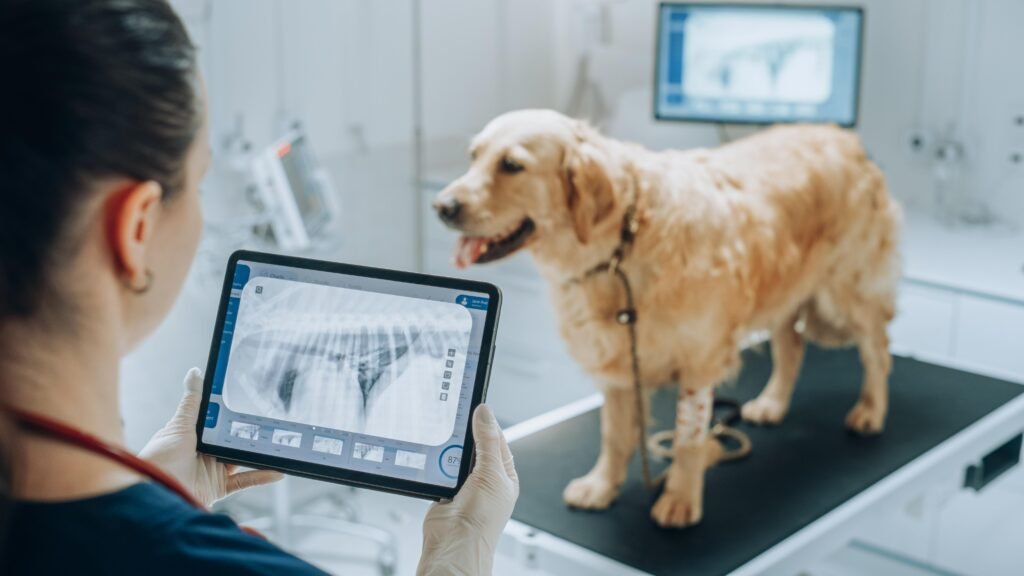
When your dog starts limping, your cat has difficulty walking, or your pet develops unexplained health problems, a physical examination may not provide all the answers. Sometimes, veterinarians need to look inside the body to understand what is happening.
Pet X-rays in Mississauga are an important diagnostic tool that can help veterinarians examine bones, joints, the chest, and certain abdominal structures. They can help identify injuries, investigate internal concerns, and guide decisions about further testing or treatment.
At Erin Centre Animal Hospital, digital pet X-rays are available for dogs and cats. Understanding when your pet may need diagnostic imaging can help you recognize concerning symptoms and seek veterinary advice at the right time.
What Are Veterinary X-Rays?
Veterinary X-rays, also called radiographs, are images created using a controlled amount of radiation to examine structures inside your pet’s body.
Different tissues absorb X-rays differently, allowing veterinarians to see bones, joints, the lungs, and certain internal structures. X-rays are particularly useful for investigating:
- Bone fractures and joint abnormalities.
- Chest and lung concerns.
- Certain abdominal problems.
- Some swallowed foreign objects.
- Certain bladder stones.
- Dental problems affecting tooth roots and surrounding bone.
X-rays provide valuable information, but they cannot identify every medical condition. Depending on your pet’s symptoms, your veterinarian may recommend an ultrasound, blood tests, urine testing, or another diagnostic procedure.
When Does Your Dog Need an X-Ray?
Dogs can develop injuries and health conditions that require a closer examination. Your veterinarian may recommend an X-ray when a physical examination suggests an underlying problem. Common situations include:
1. Limping or Difficulty Walking
If your dog suddenly starts limping or avoids putting weight on a leg, an X-ray may help identify a fracture, bone injury, or joint abnormality.
Persistent limping can also be associated with arthritis and other orthopedic conditions. Your veterinarian will determine whether imaging is appropriate.
2. Suspected Fractures or Accidental Injuries
Falls, road accidents, and other injuries can cause damage to bones and joints. X-rays help veterinarians assess suspected fractures and determine the extent of certain injuries.
3. Persistent Coughing or Breathing Concerns
Chest X-rays can help evaluate the lungs, heart silhouette, and surrounding structures when a dog has a persistent cough or respiratory symptoms.
4. Suspected Swallowed Objects
Dogs sometimes swallow toys, bones, fabric, or other household objects. Abdominal X-rays may help identify certain foreign objects or signs of an intestinal blockage.
Some materials are difficult to see on standard X-rays, so additional imaging may be necessary.
5. Abdominal Discomfort or Swelling
If your dog experiences unexplained abdominal discomfort, vomiting, or swelling, your veterinarian may recommend imaging to investigate the cause.
A swollen abdomen accompanied by repeated unsuccessful attempts to vomit, restlessness, or weakness requires immediate veterinary attention.
6. Age-Related Joint and Bone Concerns
Older dogs may develop arthritis, reduced mobility, and other musculoskeletal problems. X-rays can help evaluate changes in the joints and bones when recommended by your veterinarian.
When Might Your Cat Need an X-Ray?
Cats are naturally good at hiding discomfort. Changes in movement, appetite, breathing, or everyday behaviour may be signs that something is wrong.
A veterinary examination and, when appropriate, diagnostic imaging can help investigate these changes. Common reasons for cat X-rays include:
- Falls and accidental injuries: Cats that fall from heights or experience accidents may have fractures or internal injuries.
- Difficulty walking: Limping, stiffness, or reluctance to jump may indicate bone or joint problems.
- Breathing difficulties: Chest X-rays can help evaluate the lungs and surrounding structures.
- Suspected swallowed objects: Imaging may help investigate possible foreign objects in the digestive tract.
- Urinary concerns: X-rays can help identify certain bladder stones and other visible abnormalities.
- Unexplained abdominal symptoms: Abdominal imaging may help investigate discomfort, swelling, or other concerning changes.
If your cat is repeatedly visiting the litter box but cannot pass urine, seek immediate veterinary care. A urinary blockage, particularly in male cats, can be life-threatening.
What Can Pet X-Rays Help Detect?
Pet X-rays can provide useful information about several parts of the body. Here are some common findings veterinarians may investigate:
Area | What X-rays may help identify |
Bones and joints | Fractures, bone changes and joint abnormalities |
Chest and lungs | Certain lung abnormalities and changes in the heart silhouette |
Abdomen | Organ size, position and certain digestive abnormalities |
Digestive tract | Some swallowed foreign objects and signs of obstruction |
Bladder | Certain types of bladder stones |
Teeth | Tooth roots and surrounding bone through dental radiographs |
It is important to understand that not all abnormalities are visible on X-rays. Some bladder stones, soft-tissue problems, and early disease changes may require other tests.
For example, ultrasound allows veterinarians to examine internal organs and soft tissues in greater detail. Bloodwork and urinalysis can provide additional information about your pet’s overall health.
Your veterinarian will recommend the most appropriate diagnostic approach based on the examination and symptoms.
Are X-Rays Safe for Dogs and Cats?
Veterinary X-rays are widely used and are generally considered safe when medically necessary.
They use ionizing radiation, so exposure should be carefully controlled. Veterinary teams follow radiation safety procedures and use appropriate positioning and protective equipment to minimize unnecessary exposure.
The benefits of obtaining important diagnostic information generally outweigh the small risks associated with an appropriately performed examination.
Your veterinarian will recommend imaging only when the expected diagnostic benefits justify it.
What Happens During a Pet X-Ray?
If your dog or cat needs an X-ray, the process generally involves a few steps.
1. Veterinary Examination
The veterinarian reviews your pet’s symptoms, medical history, and physical examination findings before deciding whether imaging is needed.
2. Positioning Your Pet
Your pet is carefully positioned to obtain clear images of the affected area. Proper positioning is important for accurate interpretation.
3. Sedation When Necessary
Some pets remain calm and still enough for imaging without sedation. Others may need sedation if they are anxious, painful, or unable to stay in the required position.
The decision depends on your pet’s individual condition and safety.
4. Reviewing the Images
The veterinarian reviews the images alongside the physical examination and medical history. The findings help determine whether further testing or treatment is needed.
How Should You Prepare Your Pet for an X-Ray?
Preparing your pet can help make the examination more comfortable and straightforward. Before the appointment:
- Follow any instructions provided by the veterinary team.
- Explain your pet’s symptoms and when they first appeared.
- Share relevant medical records and previous imaging reports.
- Inform the veterinarian about any medications your pet takes.
- Ask whether food or water restrictions are necessary.
- Keep your pet calm and comfortable before travelling to the clinic.
Do not withhold food or water unless your veterinary team specifically advises you to do so.
When Should You Contact a Vet in Mississauga?
You should arrange a veterinary examination if your pet experiences persistent limping, unexplained pain, coughing, changes in mobility, abdominal discomfort, or other unusual symptoms.
Early assessment helps your veterinarian understand what may be causing the problem and whether diagnostic imaging is needed.
However, some symptoms require immediate emergency veterinary attention. Seek emergency care if your pet experiences:
- Severe difficulty breathing.
- Collapse or sudden loss of consciousness.
- Major trauma, such as being hit by a vehicle.
- Suspected serious fractures or injuries.
- A swollen abdomen with repeated unsuccessful attempts to vomit.
- Inability to urinate, particularly in male cats.
Do not delay emergency care while waiting for a routine appointment.
Veterinary X-Ray Services at Erin Centre Animal Hospital
When your pet needs diagnostic imaging, choosing a veterinary team that understands their individual health needs is important.
Erin centre animal hospital provides digital pet X-ray services for dogs and cats in Mississauga. Digital radiography can help evaluate bones, joints, the chest, abdomen, and certain dental and urinary concerns.
The veterinary team assesses each pet before recommending imaging and discusses additional diagnostic testing when X-rays alone cannot provide enough information.
Whether your dog has an unexplained limp or your cat is showing unusual symptoms, the team can help assess your pet and discuss the appropriate next steps.
Pet owners in Mississauga, Erin Mills, and nearby communities can contact the clinic to arrange a veterinary examination.
Frequently Asked Questions About Pet X-Rays
1. How much does a dog or cat X-ray cost in Mississauga?
The cost of a veterinary X-ray depends on the body area being examined, the number of images required, and whether additional procedures or sedation are needed. Contact Erin Centre Animal Hospital for current pricing based on your pet’s needs.
2. Are X-rays painful for dogs and cats?
No. Taking an X-ray is generally painless. However, positioning may cause discomfort if your pet has an existing injury or painful condition. Your veterinary team will take your pet’s comfort into consideration.
3. Do pets need sedation for X-rays?
Not always. Many dogs and cats can have X-rays without sedation. It may be recommended when a pet is anxious, painful, or unable to remain still for clear images.
4. How long does a veterinary X-ray take?
The time depends on the number of images required, your pet’s cooperation, and the body area being examined. Additional time may be needed if sedation or further assessment is necessary.
5. Can an X-ray show whether a dog has swallowed something?
Yes, X-rays can help identify certain swallowed objects and signs of gastrointestinal obstruction. However, some materials are not easily visible on standard X-rays, so additional testing may be required.
6. Are X-rays safe for older pets?
Age alone does not make X-rays unsafe. When medically appropriate, they can help investigate age-related joint changes, injuries, and other health concerns. If sedation is being considered, your veterinarian will assess your senior pet’s overall health before making a recommendation.
Conclusion
Veterinary X-rays can provide valuable information when dogs and cats experience injuries, mobility problems, breathing concerns, or unexplained symptoms. They help veterinarians investigate conditions that may not be visible during a physical examination.
If you have noticed unusual changes in your pet’s health, do not ignore them. A veterinary examination can help determine whether X-rays or other diagnostic tests are necessary.
Need a veterinary examination or pet X-ray in Mississauga?
Contact Erin Centre Animal Hospital to discuss your pet’s symptoms and arrange an appointment.