
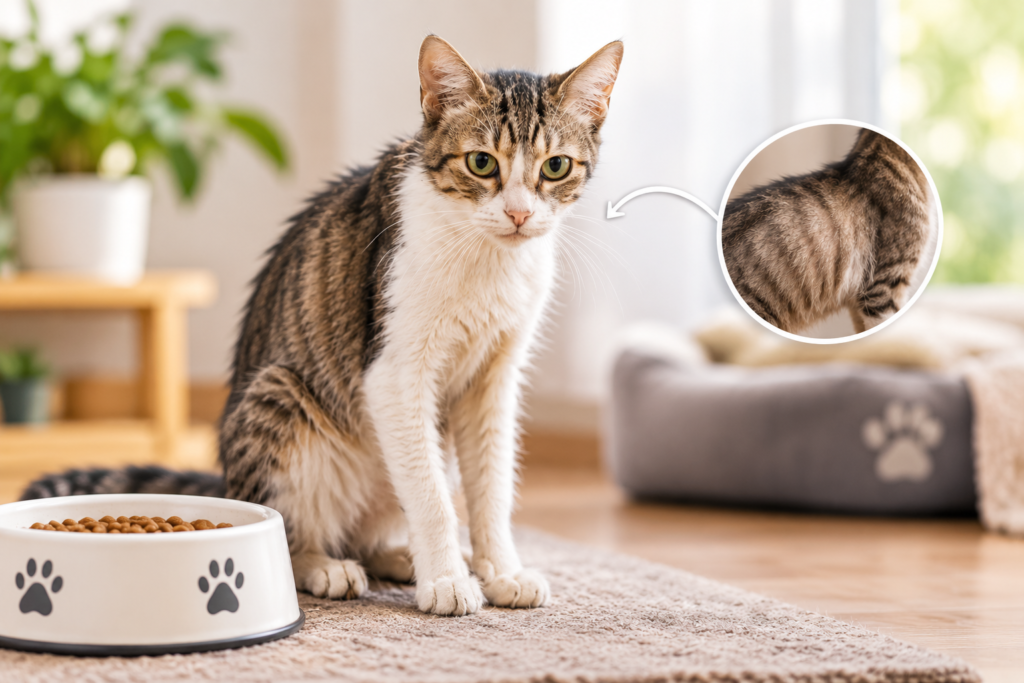
Cats can lose weight for several reasons, from changes in their eating habits to underlying health conditions. Sometimes, the change happens gradually, making it difficult for pet owners to notice until their cat looks noticeably thinner. In other cases, weight loss may occur alongside changes in appetite, thirst, energy levels, or behaviour.
Although some changes in body weight may be related to diet or activity, unexplained weight loss should not be ignored. Even if your cat is eating normally, losing weight can be a sign that something is affecting their health.
Understanding the possible causes and knowing when to seek veterinary care can help you take the right steps to protect your cat’s well-being.
How Can You Tell If Your Cat Is Losing Weight?
Because cats have fur and often change their sleeping positions, gradual weight loss is not always easy to see. You may notice that your cat feels lighter when you pick them up or that their body looks slimmer than usual.
Some common signs include:
- Ribs, spine, or hip bones becoming more noticeable
- A narrower appearance around the waist or back
- Loose-fitting collars or harnesses
- Reduced muscle around the legs or shoulders
- Changes in appetite or eating habits
- Lower energy levels or less interest in play
Regularly checking your cat’s weight can help you identify changes early. If possible, weigh your cat periodically and keep a record. Even small, ongoing changes may be worth discussing with your veterinarian, particularly if your cat is older.
What Causes Weight Loss in Cats?
There is no single explanation for unexplained weight loss. The cause may relate to how much your cat eats, how well their body absorbs nutrients, or whether an underlying condition is affecting their metabolism.
1. Changes in Appetite or Food Intake
One of the most straightforward reasons for weight loss is not eating enough. Cats may eat less because of changes in their environment, stress, competition with other pets, or a recent change in food.
Some cats are also sensitive to changes in food texture, flavour, or feeding routines. If your cat suddenly becomes reluctant to eat, it is important to look beyond simple pickiness, especially if the change continues.
Dental pain, nausea, and other medical problems can also make eating uncomfortable. If your cat is eating significantly less than usual, contact your veterinarian for advice. Cats that stop eating need prompt attention because prolonged inadequate food intake can lead to serious complications.
2. Hyperthyroidism
Hyperthyroidism is a common hormonal condition in older cats. It occurs when the thyroid gland produces too much thyroid hormone, increasing the body’s metabolic rate.
A cat with this condition may lose weight despite having a normal or increased appetite. Other signs can include restlessness, increased thirst, more frequent urination, vomiting, diarrhoea, or a faster heart rate.
Because these symptoms can overlap with other health problems, a veterinary examination and appropriate blood tests are needed to identify the cause.
3. Diabetes
Diabetes can affect how a cat’s body uses glucose for energy. When the body cannot use glucose effectively, it may begin breaking down fat and muscle, resulting in weight loss.
You might also notice that your cat drinks more water, urinates more frequently, or seems hungrier than usual. Some cats become less active or develop weakness in their hind legs.
If these changes appear together, arrange a veterinary assessment. Early diagnosis and appropriate management can help improve your cat’s quality of life.
4. Kidney Disease
Chronic kidney disease is another condition that can affect older cats. As kidney function declines, waste products can build up in the body, sometimes causing nausea, reduced appetite, dehydration, and gradual weight loss.
Increased thirst and urination may be early signs. Some cats also develop vomiting, bad breath, or changes in their usual behaviour.
Kidney disease cannot be diagnosed from weight loss alone. Your veterinarian may recommend blood tests, urine testing, blood pressure measurement, or other investigations depending on your cat’s symptoms.
5. Dental Problems and Mouth Pain
Dental disease can make chewing uncomfortable, even when a cat appears interested in food. Inflamed gums, damaged teeth, and other oral problems may cause a cat to eat less or avoid certain foods.
Signs of oral discomfort can include drooling, bad breath, dropping food while eating, chewing on one side, or pawing at the mouth. However, cats often hide pain, so visible symptoms may be limited.
If your cat’s eating habits change or they seem uncomfortable while chewing, a dental examination can help determine whether oral pain is contributing to the weight loss.
6. Digestive Problems and Poor Nutrient Absorption
A cat may continue eating but lose weight if the digestive system cannot properly digest food or absorb nutrients. Conditions affecting the intestines, pancreas, or other parts of the digestive system can contribute to this problem.
Possible signs include recurring vomiting, diarrhoea, changes in stool, excessive gas, or a persistently poor appetite. Some cats show very few digestive symptoms apart from gradual weight loss.
Your veterinarian may recommend stool testing, blood work, imaging, or other tests based on the examination findings.
7. Stress and Changes at Home
Cats are sensitive to changes in their surroundings. Moving house, introducing a new pet, changes in household routines, or conflict between cats can affect eating habits.
A stressed cat may hide more often, avoid the food bowl, or become less interactive. However, stress should not automatically be assumed to be the cause of weight loss. Medical problems can produce similar changes in behaviour.
If your cat has recently experienced a major change at home, provide a quiet feeding area and maintain a consistent routine while monitoring their condition. Arrange a veterinary assessment if the weight loss continues or you notice other symptoms.
8. Age-Related Changes and Other Illnesses
Older cats may gradually lose muscle as they age, but noticeable weight loss should not simply be considered a normal part of getting older.
Several conditions, including chronic inflammation, infections, and some cancers, can affect body weight. The symptoms vary depending on the underlying problem, and weight loss may be the first noticeable sign.
A veterinary examination can help distinguish normal changes in body condition from problems that need treatment.
Why Is My Cat Losing Weight but Still Eating Normally?
It can be confusing when your cat continues eating well but becomes thinner. In some cases, the body may be using energy faster than usual. In others, nutrients may not be absorbed properly or an illness may interfere with normal metabolism.
Conditions such as hyperthyroidism, diabetes, and certain digestive disorders can cause this pattern.
Pay attention to other changes, including increased thirst, more frequent urination, vomiting, changes in stool, or unusual activity levels. Sharing these observations with your veterinarian can help guide the next steps.
When Should You Take Your Cat to the Veterinarian?
If your cat is losing weight without an obvious explanation, book a veterinary appointment rather than waiting for the problem to become more noticeable.
Seek prompt veterinary advice if the weight loss occurs alongside changes in appetite, persistent vomiting or diarrhoea, increased thirst, or unusual tiredness.
If your cat stops eating, appears severely weak, has difficulty breathing, collapses, or seems seriously unwell, seek urgent veterinary care. Do not wait for additional symptoms to develop.
Cats can hide discomfort remarkably well, so a change in weight may be an important early clue that their health needs attention.
How Is Unexplained Weight Loss Diagnosed?
Your veterinarian will usually begin by asking about your cat’s diet, appetite, drinking habits, activity levels, medical history, and how quickly the weight change occurred.
A physical examination can help assess body condition, muscle mass, hydration, the mouth, and other areas of concern.
Depending on the findings, further tests may include:
- Blood tests to assess organ function and look for signs of disease
- Urine testing to investigate kidney problems or diabetes
- Stool testing when intestinal parasites or digestive problems are suspected
- Thyroid testing, particularly for older cats
- Imaging or additional investigations when needed
Not every cat requires every test. The appropriate approach depends on the symptoms, examination findings, and your veterinarian’s clinical judgement.
What Can You Do at Home to Support Your Cat?
While arranging veterinary care, keep track of your cat’s appetite, water intake, litter box habits, activity, and body weight. Note when you first noticed the change and whether it appears to be getting worse.
Offer a balanced, age-appropriate cat food and provide access to fresh water. Keep feeding areas calm and make sure other pets are not preventing your cat from eating.
Avoid making major dietary changes or giving supplements and medications without veterinary guidance. If an illness is causing the weight loss, changing food alone may not address the underlying problem.
A simple record of your cat’s daily habits can help your veterinarian understand what has changed and determine whether further investigation is needed.
Frequently Asked Questions
Is it normal for an older cat to lose weight?
Older cats may experience changes in muscle mass, but ongoing or unexplained weight loss should not be dismissed as a normal part of ageing. Conditions such as kidney disease, diabetes, and hyperthyroidism become more common with age and may require treatment.
Why is my cat losing weight even though it eats well?
A cat may lose weight despite eating normally if its metabolism is unusually high, its body cannot use nutrients effectively, or an underlying illness is present. A veterinary examination can help identify the cause.
Can stress cause weight loss in cats?
Yes. Stress can reduce a cat’s appetite and change its eating habits. However, medical conditions can cause similar symptoms, so persistent weight loss should be assessed by a veterinarian.
How quickly should I act if my cat is losing weight?
Arrange a veterinary appointment when you notice unexplained weight loss, even if your cat otherwise seems well. Seek more urgent advice if your cat stops eating, becomes weak, or develops other concerning symptoms.
Should I change my cat’s food if it is losing weight?
Not without considering the underlying cause. A different food may be appropriate in some situations, but weight loss caused by illness may need specific treatment. Ask your veterinarian before making significant dietary changes.
Get Veterinary Advice at Erin Centre Animal Hospital
Changes in your cat’s weight can provide important clues about their health. Whether your cat is eating less, drinking more water, or becoming thinner despite a normal appetite, identifying the cause is the best way to determine what care they need.
Erin Centre Animal Hospital provides veterinary care for cats and dogs in Mississauga, Ontario. If you have noticed unexplained weight loss or changes in your cat’s usual behaviour, contact the hospital to arrange an assessment and discuss your concerns with a veterinary professional.
Early attention can help identify potential health problems and give your cat the best opportunity to receive appropriate care.
Veterinary Disclaimer: This article is for general educational purposes only and is not a substitute for professional veterinary advice, diagnosis, or treatment. If your cat is losing weight unexpectedly or showing other signs of illness, consult a veterinarian.