
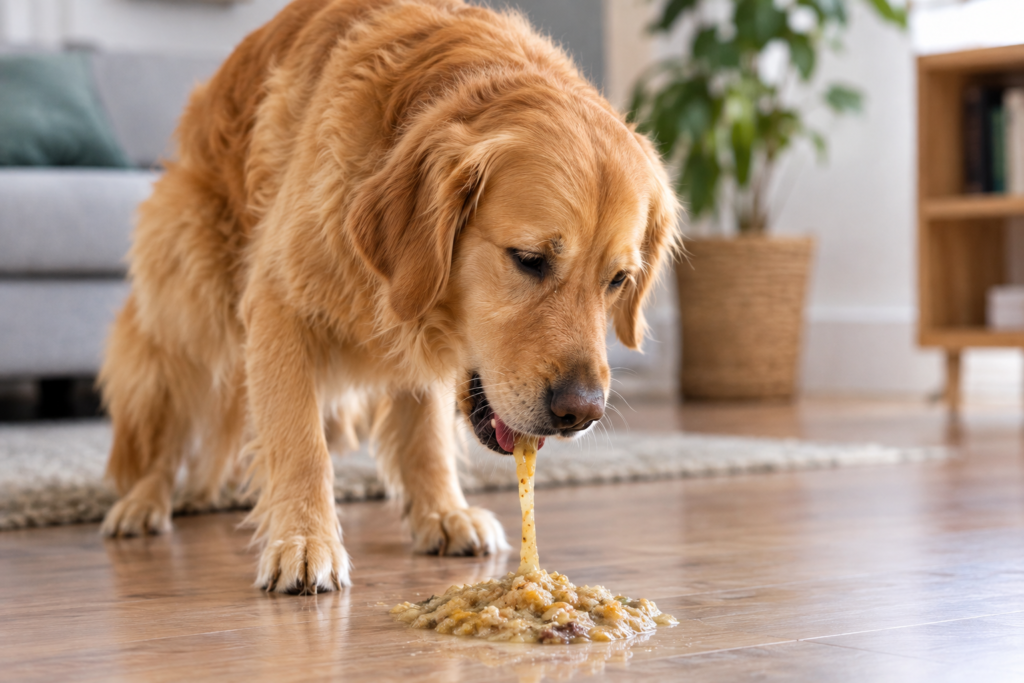
Vomiting is a common health concern in dogs and can happen for many different reasons. Sometimes, a dog may vomit after eating too quickly, overeating, or eating something unusual. In other cases, vomiting may be linked to parasites, infections, pancreatitis, toxin exposure, an intestinal blockage, or another underlying medical condition.
A single episode of vomiting does not always mean that your dog has a serious health problem. If your dog is otherwise alert, comfortable, and behaving normally, you may be able to monitor them closely. However, repeated vomiting or vomiting accompanied by other symptoms should not be ignored.
Understanding the possible causes of vomiting, what other signs to watch for, and when veterinary care is needed can help you make an informed decision about your dog’s health.
What Is Vomiting in Dogs?
Vomiting is the forceful emptying of stomach contents through the mouth. Dogs may show signs of nausea before vomiting, such as drooling, lip licking, repeated swallowing, restlessness, or changes in behaviour.
Vomiting is different from regurgitation. Regurgitation is usually a more passive process in which food or liquid comes back up from the esophagus without strong abdominal contractions. Regurgitated food may also appear relatively undigested.
This difference is useful information for a veterinarian because vomiting and regurgitation can have different causes.
Vomiting can be the body’s way of removing irritating material from the stomach or digestive tract. However, it can also occur because of health problems affecting other parts of the body.
Common Causes of Vomiting in Dogs
Dogs can vomit for many reasons. Some causes are mild and temporary, while others may require veterinary care.
Eating Too Quickly or Too Much
Eating too quickly or overeating can upset your dog’s stomach and may cause vomiting or regurgitation. Slower feeding methods or smaller meals may help some dogs.
Eating Something They Shouldn’t
Dogs may eat garbage, spoiled food, plants, toys, bones, or other objects. This can cause vomiting and diarrhea. Swallowed objects may also cause an intestinal blockage and require prompt veterinary attention.
Sudden Food Changes
Changing your dog’s food too quickly can cause digestive upset. Introduce new food gradually to give your dog’s digestive system time to adjust.
Food Sensitivity or Intolerance
Some dogs may not tolerate certain foods or ingredients, which can lead to vomiting or diarrhea. If vomiting repeatedly occurs after eating a particular food, speak with your veterinarian.
Parasites and Infections
Intestinal parasites and gastrointestinal infections can cause vomiting, diarrhea, appetite changes, and other digestive problems. Your veterinarian may recommend fecal testing or other tests to identify the cause.
Pancreatitis and Other Medical Conditions
Pancreatitis, liver or kidney problems, and gastrointestinal inflammation can cause vomiting. Other symptoms may include poor appetite, abdominal discomfort, and lethargy.
Foreign Objects and Intestinal Blockages
Dogs can swallow toys, bones, socks, rocks, and other objects. If an object becomes stuck, it can cause an intestinal blockage. Repeated vomiting, loss of appetite, abdominal discomfort, and lethargy may occur.
Toxins and Poisonous Substances
Medications, household chemicals, certain foods, and plants can be toxic to dogs. If you suspect your dog has eaten something poisonous, contact a veterinarian promptly. Do not induce vomiting or give medications unless advised by a veterinary professional.
What Does the Colour or Appearance of Dog Vomit Mean?
The appearance of vomit can provide useful information, but colour alone cannot determine the cause.
Undigested food: May occur when a dog vomits soon after eating. Eating too quickly or overeating can contribute, but other causes are possible.
Yellow or green bile: May occur when the stomach is relatively empty. Repeated vomiting still requires attention.
White foam: Can result from saliva and stomach fluid mixing with air. It may occur with digestive upset but does not identify a specific cause.
Clear liquid: May contain water, saliva, or stomach fluid.
Brown or dark material: Can have different causes, including recently eaten food. Material resembling coffee grounds may indicate digested blood.
Blood: Fresh red blood or coffee-ground-like material should be taken seriously and warrants veterinary assessment.
If you are concerned about the appearance of your dog’s vomit, take note of it and tell your veterinarian what you observed.
Other Symptoms to Watch for When Your Dog Vomits
Vomiting should be considered alongside your dog’s overall condition.
Watch for:
Loss of appetite
Diarrhea
Lethargy
Abdominal discomfort or pain
Excessive thirst
Changes in urination
Weakness
Fever
Signs of dehydration
Restlessness
Changes in normal behaviour
Repeated retching
A dog that vomits once but remains alert and comfortable is different from a dog that vomits repeatedly and becomes weak or painful.
What Should You Do When Your Dog Vomits?
If your dog vomits, start by observing their overall condition.
1. Observe their behaviour: Check whether your dog remains alert, responsive, and comfortable.
2. Note how often they vomit: Keep track of the number of episodes and when they occur.
3. Observe the vomit: Note whether it contains food, bile, foam, blood, or foreign material.
4. Provide access to fresh water: Vomiting can cause fluid loss. If your dog repeatedly vomits after drinking or cannot keep water down, contact a veterinarian.
5. Avoid unfamiliar foods: Do not introduce new foods, rich treats, table scraps, or human medications without veterinary guidance.
6. Monitor for additional symptoms: Watch for diarrhea, weakness, abdominal pain, appetite changes, or unusual behaviour.
If vomiting continues or concerning symptoms develop, contact your veterinary team.
When Is Dog Vomiting an Emergency?
Some signs require prompt veterinary attention. Seek veterinary care if your dog has:
Repeated or persistent vomiting
Blood in the vomit
Severe weakness or collapse
Severe abdominal pain
A swollen or distended abdomen
Repeated retching without producing vomit
Inability to keep water down
Suspected poisoning
Suspected foreign-object ingestion
Difficulty breathing
Significant changes in responsiveness or behaviour
Repeated unproductive retching combined with a swollen abdomen can be particularly concerning and should be treated as an emergency.
If you are unsure whether your dog’s symptoms are serious, contact a veterinary professional rather than waiting for the condition to worsen.
How Does a Veterinarian Diagnose the Cause of Vomiting?
Your veterinarian will begin by asking questions about your dog’s symptoms and medical history. This may include:
When the vomiting started
How frequently it has occurred
What the vomit looks like
What your dog has eaten recently
Recent food changes
Current medications
Possible toxin exposure
Possible foreign-object ingestion
Appetite and water consumption
Urination and bowel movements
Other changes in behaviour
A physical examination can help assess hydration, abdominal discomfort, temperature, and other signs of illness.
Depending on the situation, your veterinarian may recommend blood tests, urine testing, fecal testing, X-rays, abdominal ultrasound, or other diagnostic tests.
The appropriate tests depend on your dog’s age, symptoms, medical history, and examination findings.
How Is Vomiting Treated in Dogs?
Treatment depends on the underlying cause. Depending on the diagnosis, treatment may include:
Fluid therapy
Dietary management
Anti-nausea medication when appropriate
Treatment for parasites
Treatment for certain infections
Management of an underlying medical condition
Supportive care
Surgery or another intervention for an intestinal obstruction
The goal is not simply to stop vomiting. Your veterinarian also needs to determine and address the reason your dog is vomiting.
A dog with a temporary digestive upset may need a different approach from a dog with pancreatitis, toxin exposure, or an intestinal obstruction.
How Can You Help Prevent Vomiting in Your Dog?
Not every cause of vomiting can be prevented, but some everyday habits can reduce certain risks.
Feed a balanced diet appropriate for your dog’s nutritional needs.
Introduce new food gradually.
Avoid excessive table scraps and unfamiliar foods.
Keep garbage and unsafe objects out of reach.
Store medications and household chemicals securely.
Prevent access to potentially toxic foods and plants.
Use appropriate meal portions.
Consider slower feeding methods for dogs that eat too quickly.
Keep up with routine veterinary examinations and preventive care.
Regular veterinary checkups can help monitor your dog’s overall health and identify potential problems before they become more advanced.
FAQ’s About Dog Vomiting
Why is my dog vomiting all of a sudden?
Sudden vomiting can result from eating something unusual, eating too quickly, a sudden food change, parasites, infection, toxin exposure, pancreatitis, or another medical condition. If vomiting continues or other concerning symptoms appear, contact your veterinarian.
Should I be worried if my dog vomits once?
One episode of vomiting does not necessarily mean your dog has a serious illness. If your dog remains alert and comfortable, monitor closely for additional symptoms. Repeated vomiting, weakness, pain, blood in the vomit, or inability to keep water down requires veterinary attention.
Why is my dog vomiting yellow bile?
Yellow or greenish vomit may contain bile, particularly when the stomach is empty. However, bile does not identify the cause of vomiting. Repeated vomiting should be discussed with your veterinarian.
Why is my dog vomiting white foam?
White foam can form when saliva and stomach fluid mix with air. It can occur with digestive upset, but white foam alone cannot identify the cause. Repeated vomiting or other concerning symptoms should be evaluated.
Can eating too fast cause a dog to vomit?
Yes. Eating too quickly or consuming too much food can contribute to vomiting or regurgitation. If your dog regularly eats very quickly, discuss feeding strategies with your veterinarian.
What should I give my dog after vomiting?
The appropriate feeding plan depends on your dog’s condition and the possible cause of vomiting. Avoid unfamiliar foods, rich treats, table scraps, and human medications unless your veterinarian recommends them.
When should I take my dog to the vet for vomiting?
Contact your veterinarian if vomiting is repeated or persistent, or if it occurs with weakness, abdominal pain, blood, dehydration, loss of appetite, a swollen abdomen, or significant behaviour changes. Prompt care is also important when toxin exposure or foreign-object ingestion is suspected.
Can vomiting be a sign of an intestinal blockage?
Yes. A swallowed foreign object can become lodged in the digestive tract and cause an obstruction. Repeated vomiting, loss of appetite, abdominal discomfort, and lethargy can occur. Suspected foreign-object ingestion should be discussed with a veterinarian promptly.
When to Contact a Veterinarian
Vomiting can range from a temporary digestive upset to a sign of a condition that requires urgent treatment. The number of vomiting episodes, your dog’s overall behaviour, other symptoms, and possible exposure to toxins or foreign objects all matter.
If your dog vomits repeatedly, appears weak or painful, has blood in the vomit, cannot keep water down, develops a swollen abdomen, repeatedly retches without producing vomit, or may have eaten something dangerous, seek veterinary care promptly.
If you are concerned about your dog’s vomiting or are unsure whether your dog needs an examination, speaking with a veterinary professional can help determine the safest next step.
Veterinary Care for Dogs in Mississauga
At Erin Centre Animal Hospital, our veterinary team provides veterinary care for dogs and cats in Mississauga. If your dog is experiencing repeated vomiting or other signs of illness, a veterinary examination can help determine whether diagnostic testing or treatment is needed.
Paying attention to changes in your dog’s behaviour and seeking veterinary advice when symptoms are persistent or concerning can help support your pet’s health and wellbeing.