
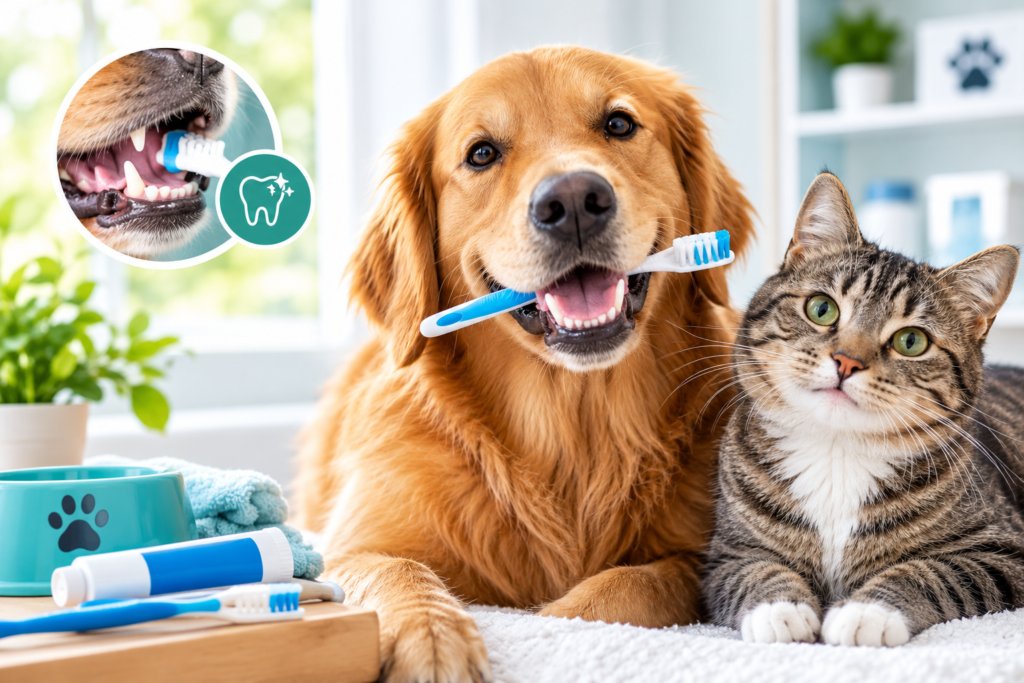
Dental health is an important part of your pet’s overall health, but it is often overlooked. Dogs and cats can develop plaque, tartar, gum disease, and other oral health problems that may cause discomfort and affect their quality of life.
Some pets may continue eating normally even when they have dental pain, which can make oral problems difficult for pet owners to notice. Regular dental care and veterinary examinations can help identify problems early and support better oral health throughout your pet’s life.
At Erin Centre Animal Hospital, our veterinary team provides dental care for dogs and cats in Mississauga. Here is what pet owners should know about the importance of pet dental care and the signs that may indicate your pet needs a dental examination.
Why Is Dental Care Important for Pets?
Your pet’s mouth is an important part of their overall health. Healthy teeth and gums allow pets to eat comfortably and support normal daily activities.
Without appropriate dental care, plaque can build up on the teeth and eventually harden into tartar. This can contribute to inflammation of the gums and periodontal disease.
Regular dental care can help:
Maintain healthy teeth and gums
Reduce plaque and tartar buildup
Identify dental problems early
Address sources of oral discomfort
Support your pet’s overall health
Help maintain a better quality of life
Dental care is not only about keeping your pet’s teeth clean. It is also about identifying and managing oral health problems before they become more serious.
What Is Dental Disease in Dogs and Cats?
Dental disease refers to problems affecting the teeth, gums, and other structures in the mouth.
One of the most common concerns is periodontal disease. It begins when plaque builds up on the teeth. If plaque is not removed, it can harden into tartar.
Over time, bacteria and inflammation can affect the gums and supporting structures around the teeth.
Early dental disease may not be obvious to pet owners. As the condition progresses, pets can develop signs such as bad breath, red or swollen gums, difficulty chewing, or changes in eating habits.
What Causes Dental Problems in Pets?
Several factors can contribute to dental disease.
Plaque and Tartar
Plaque is a bacterial film that forms on the teeth. When plaque remains on the teeth, it can harden into tartar.
Tartar cannot always be removed with routine brushing once it has hardened, which is why professional veterinary dental care may be necessary.
Poor Oral Hygiene
Without regular oral care, plaque can accumulate more quickly.
Your veterinarian can recommend an appropriate dental-care routine based on your pet’s age, health, and individual needs.
Age
Dental problems can become more common as pets get older, although dental disease can affect young animals too.
Routine veterinary examinations allow your veterinarian to monitor your pet’s oral health throughout different life stages.
Breed and Individual Factors
Some pets may be more prone to dental problems because of their mouth structure, tooth alignment, or other individual factors.
Small dogs, for example, can be particularly susceptible to dental disease because their teeth may be closely positioned within the mouth.
Signs Your Pet May Have a Dental Problem
Pets do not always show obvious signs of dental pain. Some continue eating despite having significant oral disease.
Watch for changes such as:
Bad breath
Red or swollen gums
Yellow or brown buildup on the teeth
Drooling more than usual
Difficulty chewing
Dropping food while eating
Chewing on one side of the mouth
Pawing at the mouth
Reluctance to eat
Changes in appetite
Loose or damaged teeth
Bleeding from the gums
Facial swelling
Changes in behaviour
If you notice any of these signs, schedule a veterinary examination.
Is Bad Breath Normal for Dogs and Cats?
A common misconception is that bad breath is simply part of having a pet.
Persistent bad breath is not something that should automatically be considered normal.
It can be associated with plaque, tartar, gum disease, infection, or other oral health problems. In some cases, unpleasant breath can also be associated with health conditions outside the mouth.
If your pet has persistent bad breath, your veterinarian can examine their mouth and determine whether further dental care is needed.
Why Do Pets Need Professional Dental Care?
Brushing at home can help reduce plaque, but it does not replace professional veterinary dental examinations.
During a dental assessment, your veterinarian can examine the teeth and gums for signs of disease or other problems.
Depending on your pet’s oral health, professional dental care may involve cleaning and polishing the teeth under anesthesia, along with a more detailed examination of the mouth.
Anesthesia allows the veterinary team to properly assess and clean areas that cannot be safely or thoroughly examined while a pet is awake.
Your veterinarian can determine what level of dental care is appropriate for your pet.
What Happens During a Pet Dental Cleaning?
The exact process can vary depending on the pet and the condition of their teeth.
A professional veterinary dental procedure may include:
Pre-Dental Examination
Your pet’s health is assessed before anesthesia and the dental procedure.
Your veterinarian may recommend bloodwork or other assessments depending on your pet’s age, health, and medical history.
Anesthesia
Veterinary dental procedures are generally performed under anesthesia so the veterinary team can safely examine and clean the teeth.
Anesthesia also allows the mouth to be thoroughly evaluated without causing unnecessary stress or discomfort.
Dental Examination
The veterinarian examines the teeth, gums, and other structures inside the mouth.
If significant dental disease is identified, additional treatment may be recommended.
Cleaning and Polishing
The teeth are professionally cleaned to remove plaque and tartar.
The teeth may then be polished to help create a smoother surface.
Dental X-Rays When Appropriate
Some dental problems occur below the gumline and cannot be fully evaluated by simply looking at the visible portion of the tooth.
Your veterinarian may recommend dental X-rays when appropriate to assess the structures below the gumline.
Can Dental Disease Affect Your Pet’s Overall Health?
Dental disease is more than a cosmetic concern.
The mouth contains many bacteria, and significant oral inflammation can affect your pet’s health and comfort.
Advanced periodontal disease can damage the tissues supporting the teeth and may lead to tooth loss.
Your veterinarian can assess your pet’s individual risk and recommend appropriate dental care.
It is important not to assume that every pet with dental disease will develop problems in other organs. Instead, regular dental examinations help identify oral disease and address it appropriately.
How Can You Help Keep Your Pet’s Teeth Healthy at Home?
Professional veterinary dental care is only one part of maintaining good oral health.
Depending on your pet’s needs, your veterinarian may recommend a combination of home-care strategies.
Brush Your Pet’s Teeth
Regular tooth brushing can help reduce plaque buildup.
Introduce brushing gradually and use products specifically designed for pets.
Never use human toothpaste unless your veterinarian specifically recommends it. Some ingredients in human dental products may not be safe for pets.
Schedule Regular Veterinary Examinations
Your veterinarian can check your pet’s teeth and gums during routine wellness visits.
Regular examinations can help identify dental problems before they become more advanced.
Use Veterinary-Recommended Dental Products
There are many dental products available for dogs and cats, including dental diets, chews, toothbrushes, and other products.
Not every product is appropriate for every pet. Ask your veterinary team which options may be suitable for your pet.
Start Dental Care Early
Introducing dental care while your pet is young can make it easier to establish a routine.
However, it is never too late to discuss dental health with your veterinarian.
How Often Should Your Pet Have a Dental Checkup?
There is no single schedule that is appropriate for every dog or cat.
Your veterinarian can recommend how frequently your pet’s teeth should be examined based on their age, breed, existing dental health, and individual risk factors.
Dental health should also be checked during routine wellness examinations.
If you notice bad breath, tartar, red gums, difficulty eating, or other changes between appointments, contact your veterinary team rather than waiting for the next routine visit.
When Should You Take Your Pet to the Vet for Dental Problems?
Schedule a veterinary examination if you notice signs such as:
Persistent bad breath
Significant tartar buildup
Red or bleeding gums
Difficulty eating
Loose teeth
Facial swelling
Excessive drooling
Pawing at the mouth
Changes in appetite
Signs of oral pain
Sudden facial swelling, significant bleeding, severe pain, difficulty breathing, or other serious symptoms should be treated as urgent concerns.
Dental Care for Senior Pets
Older dogs and cats may have a greater risk of dental problems because they have had more time to develop plaque and tartar.
However, dental disease is not an inevitable part of aging.
Senior pets can still benefit from regular oral examinations and appropriate dental care. Your veterinarian can consider your pet’s overall health when determining whether a dental procedure or other treatment is appropriate.
Frequently Asked Questions About Pet Dental Care
How often should I brush my dog’s teeth?
Ideally, teeth should be brushed regularly as part of a consistent home dental-care routine. Your veterinarian can show you how to introduce brushing gradually and recommend an appropriate pet toothbrush and toothpaste.
Do cats need dental care?
Yes. Cats can develop plaque, tartar, gum inflammation, periodontal disease, and other oral health problems. Regular veterinary examinations can help monitor their dental health.
Is bad breath in dogs normal?
Persistent bad breath should not simply be considered normal. It can be associated with dental disease or other health concerns and should be discussed with your veterinarian.
Can I clean my pet’s teeth at home?
Home dental care, particularly regular brushing, can help reduce plaque. However, it does not replace professional veterinary examinations and dental treatment when disease is present.
Does my pet need anesthesia for a professional dental cleaning?
Veterinary dental procedures generally require anesthesia so the veterinary team can safely and thoroughly examine and clean the mouth, including areas below the gumline. Your veterinarian will assess whether anesthesia is appropriate for your individual pet.
When should a puppy or kitten start dental care?
It is a good idea to introduce your pet to gentle oral-care routines while they are young. Starting early can help them become comfortable with tooth brushing and regular mouth handling.
Protect Your Pet’s Dental Health
Good dental care is an important part of responsible pet ownership. Regular home care, routine veterinary examinations, and professional dental treatment when needed can help protect your pet’s teeth and gums.
If you notice persistent bad breath, tartar, red gums, difficulty eating, or other changes in your pet’s mouth, speak with your veterinarian.
At Erin Centre Animal Hospital, our veterinary team provides dental care for dogs and cats in Mississauga and can assess your pet’s oral health and recommend appropriate care.
If you are concerned about your pet’s teeth or gums, contact Erin Centre Animal Hospital to schedule a dental or wellness examination.