
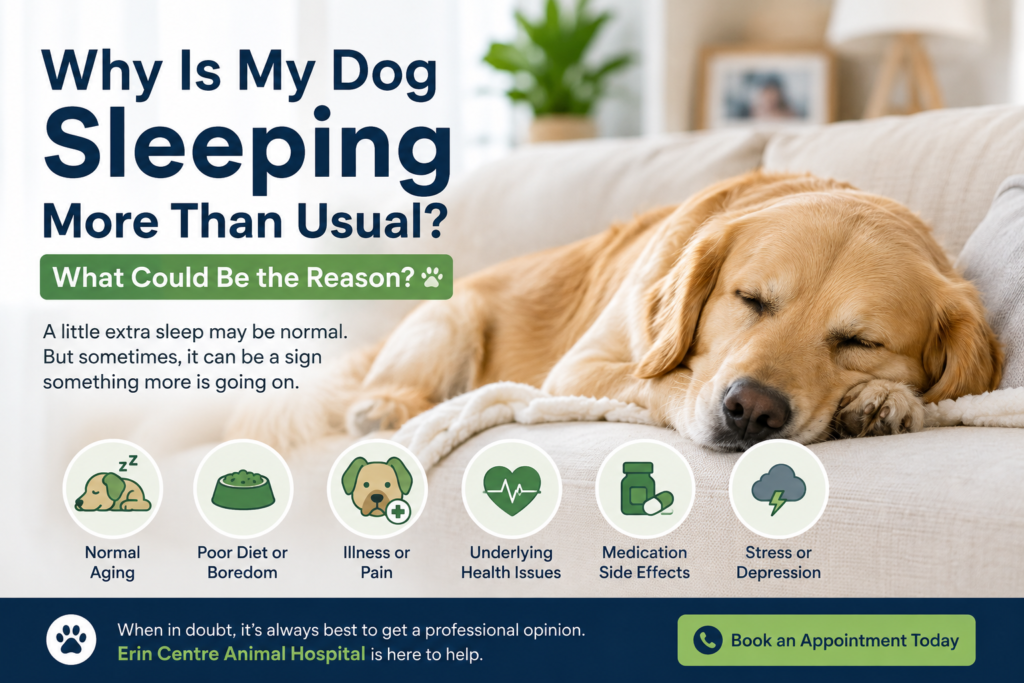
Dogs are naturally good sleepers. It is common to find your dog napping after a walk, resting in the afternoon, or sleeping for much of the night. In fact, dogs generally need considerably more sleep than humans.
But what if your dog suddenly starts spending much more time asleep than they normally do?
If you are asking, “Why is my dog sleeping more than usual?”, the answer is not always a sign of illness. Your dog’s age, activity level, environment, daily routine, and individual sleep needs can all affect how much they rest. However, a noticeable change in sleeping habits can sometimes be associated with stress, pain, medication, or an underlying health condition.
The most important thing is not to focus only on the number of hours your dog sleeps. Instead, consider whether their overall behavior has changed. A dog that sleeps for 14 hours but wakes up happily for meals, walks, and play may be very different from a dog that sleeps for the same amount of time but seems weak, uninterested, or difficult to wake.
Understanding that difference can help you decide when increased sleep is probably normal and when it is worth speaking with a veterinarian.
How Much Do Dogs Normally Sleep?
There is no single number of hours that is “normal” for every dog. Sleep requirements vary based on age, breed, size, activity level, health, and individual personality.
Many adult dogs sleep or rest for roughly 12 to 14 hours over a 24-hour period, although some healthy dogs may sleep more. Puppies can spend much of their day sleeping because their bodies and nervous systems are still developing. Senior dogs may also require additional rest as their energy levels and physical activity change.
A dog’s sleep is also different from human sleep. Dogs often sleep in several periods throughout the day rather than having one long sleep period. They may alternate between short naps, periods of quiet rest, and deeper sleep.
Because of these natural variations, sleeping a lot does not automatically mean that something is wrong.
The more useful question is: Has your dog’s sleeping behavior changed compared with what is normal for them?
If your dog has always been a long sleeper and remains active and alert when awake, there may be no reason for concern. A sudden or persistent change deserves more attention, particularly when other symptoms appear.
Why Is My Dog Sleeping More Than Usual?
There are many possible reasons a dog may sleep more than normal. Some are part of normal life, while others can indicate that something is affecting your dog’s physical or emotional health.
Age Can Change Your Dog’s Sleep Needs
Age is one of the simplest explanations for changes in sleeping patterns.
Puppies require a significant amount of sleep because growth and development take a lot of energy. It is not unusual for a young puppy to sleep for much of the day, waking for eating, playing, eliminating, and interacting with people.
Senior dogs may also sleep more than they did when they were younger. As dogs age, their metabolism, energy levels, and activity patterns can change. Older dogs may need more time to recover after physical activity and may naturally spend more of the day resting.
However, increased sleeping in a senior dog should not automatically be dismissed as “just old age.” Arthritis, chronic pain, dental disease, hormonal disorders, and other age-related health problems can also cause an older dog to become less active.
If your older dog has experienced a noticeable change in sleep or energy, particularly if it happens together with changes in appetite, mobility, behavior, or weight, it is worth discussing with your veterinarian.
Your Dog May Simply Be Recovering From a Busy Day
Physical activity can temporarily increase your dog’s need for rest.
If your dog has recently gone on a longer walk, played more than usual, attended training, traveled, or spent a particularly active day outside, additional sleep may simply be part of normal recovery.
You may notice that your dog sleeps longer after a busy day and then returns to their usual energy level once they have rested.
This is generally different from persistent lethargy. A tired dog should usually become more alert when they have had enough rest and should still show interest in normal activities such as eating, going outside, playing, or interacting with their family.
Changes in Weather Can Affect Activity
Weather can also influence how active your dog is.
During very hot weather, many dogs naturally reduce their physical activity and spend more time resting indoors. Cold or rainy weather may have a similar effect on dogs that normally enjoy spending time outside.
If your dog is sleeping more during a period of extreme weather but otherwise has a normal appetite, behavior, and energy level when awake, the change may be temporary.
However, excessive heat can be dangerous for dogs. If increased resting occurs alongside heavy panting, weakness, excessive drooling, confusion, vomiting, or collapse, seek veterinary attention promptly.
Stress and Anxiety May Change Sleeping Habits
Dogs can respond to emotional stress in different ways. Some become restless and have difficulty settling down, while others become quieter and spend more time sleeping or withdrawing.
A change in the household can be enough to affect a dog’s routine. Moving to a new home, introducing another pet, having visitors, changing work schedules, or experiencing unfamiliar noises may all cause temporary stress.
Pay attention to your dog’s behavior when they are awake. A dog experiencing stress may also show changes such as hiding, reduced interaction, excessive licking, whining, pacing, changes in appetite, or reluctance to participate in normal activities.
If you believe stress may be affecting your dog, maintaining a predictable routine and providing a quiet, comfortable resting area can help. Persistent behavioral changes should be discussed with a veterinarian, especially when physical symptoms are also present.
Medication Can Cause Increased Sleepiness
Certain medications can affect a dog’s energy level and may cause drowsiness.
If your dog started sleeping significantly more after beginning a new medication, tell your veterinarian about the change. The timing of the symptom can be useful when determining whether medication could be contributing to the increased sleepiness.
Never stop, increase, decrease, or change a prescribed medication without speaking with your veterinarian first.
Pain Can Make a Dog Less Active
Pain is an important possibility to consider when a dog suddenly becomes less active.
Dogs do not always cry or visibly limp when they are uncomfortable. Some dogs respond to pain by becoming quiet, avoiding movement, or spending more time resting.
For example, a dog with joint discomfort may still walk around the house but stop wanting to climb stairs, jump onto furniture, or play. An uncomfortable dog may also take longer to get up after resting or change their sleeping position frequently because they cannot get comfortable.
Pain can come from many different sources, including injuries, dental problems, arthritis, gastrointestinal problems, or other medical conditions.
If your dog’s increased sleeping is accompanied by signs of discomfort or a clear reduction in normal movement, a veterinary examination is appropriate.
Can Illness Cause a Dog to Sleep More?
Yes. Increased sleeping can sometimes occur when a dog is unwell.
When the body is dealing with infection, inflammation, pain, or another medical problem, a dog may have less energy for normal activities. Instead of playing, greeting family members, or asking to go outside, they may spend more time lying down.
A number of health conditions can potentially be associated with reduced energy, including infections, anemia, hormonal disorders, diabetes, heart or respiratory problems, and other systemic illnesses.
However, increased sleeping alone cannot tell you which condition, if any, is affecting your dog.
This is why looking at the complete picture is important. A dog that is sleeping more but eating normally, drinking normally, playing normally, and behaving normally when awake may be very different from a dog that is sleeping more and also losing weight, refusing food, vomiting, coughing, or struggling to walk.
If you notice several changes at the same time, contact your veterinarian for advice.
Normal Sleepiness vs. Possible Lethargy
Normal sleepiness | Possible lethargy |
Wakes easily | Difficult to wake or unusually unresponsive |
Interested in food | Reduced or absent appetite |
Returns to normal after rest | Remains weak or inactive |
Interested in walks or play | Avoids normal activities |
Normal behavior when awake | Noticeable behavior change |
Temporary increase in sleep | Persistent or worsening lack of energy |
This distinction can be especially useful when deciding whether to simply monitor your dog or contact your veterinarian.
When Should I Worry About My Dog Sleeping Too Much?
There is no exact number of sleeping hours that automatically means a dog is sick. Instead, veterinarians generally consider the dog’s overall condition and whether there has been a significant change from their normal behavior.
Increased sleep becomes more concerning when it is sudden, persistent, or accompanied by other symptoms.
For example, contact your veterinarian if your dog is sleeping more than usual and you also notice:
Loss of appetite or a significant change in eating
Vomiting or diarrhea
Unexplained weight loss
Changes in drinking or urination
Persistent coughing
Difficulty breathing
Difficulty walking or getting up
Signs of pain
Weakness
Significant changes in behavior
Repeated hiding or withdrawal
These symptoms do not necessarily mean your dog has a serious disease. They simply indicate that the change in behavior deserves professional assessment.
What Should I Monitor If My Dog Is Sleeping More?
If your dog is otherwise comfortable and you are not seeing emergency symptoms, observing their behavior can provide useful information.
Start by comparing your dog’s current routine with their usual behavior.
Ask yourself whether your dog is still interested in food, water, walks, play, and interaction. Notice whether they wake normally when you call their name or gently approach them. Also pay attention to whether they are moving normally once awake.
It can be helpful to record when you first noticed the change. Note whether your dog has recently started medication, experienced a change in routine, had an unusually active day, or developed any additional symptoms.
This information can be valuable if you eventually need to speak with your veterinarian.
How Can I Help My Dog Get Healthy Rest?
Healthy sleep is an important part of a dog’s overall well-being.
Your dog should have a comfortable, quiet place where they can rest without being repeatedly disturbed. Maintaining a consistent daily routine can also help dogs feel secure and make changes in behavior easier to notice.
Age-appropriate physical activity and mental stimulation are also important. Puppies and adult dogs generally benefit from appropriate exercise and interaction, while senior dogs may need activities adjusted to their mobility and comfort level.
A balanced diet, access to fresh water, regular preventive veterinary care, and attention to changes in behavior all contribute to your dog’s overall health.
If your dog appears unusually tired, do not assume that more exercise will solve the problem. When lethargy is caused by illness or pain, pushing a dog to exercise can make them more uncomfortable.
What Can I Do Before Calling the Veterinarian?
If your dog is not experiencing an emergency but you are concerned about increased sleeping, gathering a few details can make your veterinary consultation more useful.
Consider noting:
When the change in sleeping started
Whether the change happened suddenly or gradually
Whether your dog’s appetite has changed
Whether they are drinking more or less
Whether urination or bowel movements have changed
Whether they still want to walk or play
Whether they show signs of pain
Any new medications or supplements
Any recent changes to their routine or environment
Rather than trying to diagnose the problem yourself, use these observations to give your veterinarian a clearer picture of what has changed.
Final Thoughts
So, why is my dog sleeping more than usual?
There is no single answer. Dogs may sleep more because they are growing, aging, recovering from activity, adjusting to environmental changes, experiencing stress, or responding to medication. Increased sleep can also occur alongside pain or an underlying medical condition.
The most important factor is the change from your dog’s normal behavior.
If your dog wakes easily, eats normally, enjoys their usual activities, and behaves normally when awake, additional sleep may simply be part of their individual routine. But if increased sleeping is persistent or accompanied by lethargy, loss of appetite, vomiting, diarrhea, pain, weakness, breathing difficulties, or other unusual symptoms, it is important to consult a veterinarian.
As a dog owner, you know your pet’s normal habits better than anyone. Paying attention to changes in sleep, appetite, activity, and behavior can help you recognize when your dog may need professional care.
Veterinary Disclaimer
This article is provided for general educational purposes and does not replace a physical examination, diagnosis, or treatment from a qualified veterinarian. If your dog has a sudden, persistent, or concerning change in behavior or health, contact your veterinarian for appropriate advice.
Frequently Asked Questions
How many hours should a dog sleep each day?
Many adult dogs sleep or rest for approximately 12 to 14 hours over a 24-hour period, although individual needs vary. Puppies and senior dogs may sleep considerably more. Breed, activity level, health, and personality can also affect sleep requirements.
Is it normal for dogs to sleep all day?
Dogs can spend a large part of the day sleeping and resting, especially puppies and older dogs. However, a sudden change from your dog’s normal routine, particularly when combined with lethargy or other symptoms, should be evaluated.
Why is my dog sleeping a lot but acting normal?
If your dog wakes normally, eats well, remains interested in walks and play, and behaves normally when awake, additional sleep may be related to age, activity, weather, or individual sleep needs. Continue monitoring for changes.
Why is my dog tired but still eating?
Eating normally is reassuring, but it does not rule out every possible health issue. If your dog remains unusually tired or develops other symptoms, contact your veterinarian.
What is the difference between a tired dog and a lethargic dog?
A tired dog generally becomes alert and interested in normal activities after resting. A lethargic dog may remain unusually weak, inactive, or uninterested even after waking.
Should I be worried if my senior dog sleeps more?
Senior dogs often sleep more than younger dogs, but a sudden or significant increase should not automatically be considered normal aging. Watch for changes in mobility, appetite, behavior, weight, and signs of pain.
When should I take my dog to the vet for sleeping too much?
Consider contacting your veterinarian when increased sleeping is persistent, noticeably different from your dog’s normal behavior, or accompanied by symptoms such as appetite changes, vomiting, diarrhea, weakness, pain, breathing problems, or changes in drinking and urination.
Can stress make a dog sleep more?
Yes. Stress and changes in routine can affect a dog’s activity and sleeping behavior. Some dogs become restless, while others withdraw and rest more. Persistent behavioral changes should be discussed with a veterinarian.