
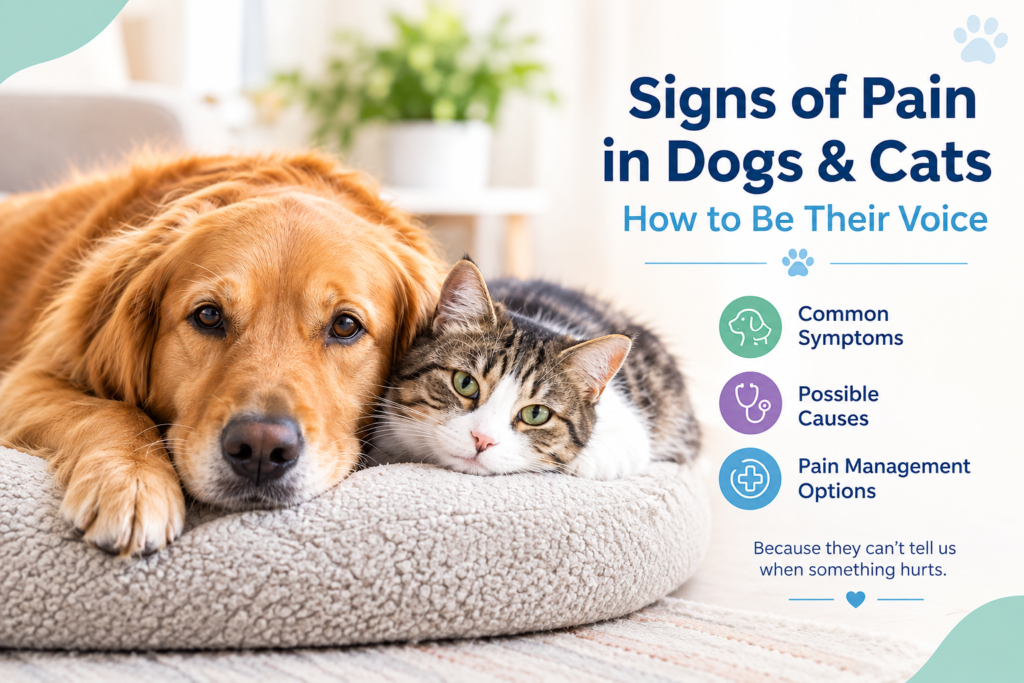
Our pets give us unconditional love, companionship, and plenty of memorable moments. But when a dog or cat is in pain, they cannot tell us exactly what hurts or how they feel.
Animals can also be very good at hiding discomfort. This instinct can make it difficult for pet owners to recognize pain until it begins to affect their pet’s daily life.
Learning to recognize the signs of pain in dogs and cats can help you identify changes earlier and seek appropriate veterinary care.
At Erin Centre Animal Hospital in Mississauga, we understand that recognizing subtle changes in your pet’s behavior is an important part of caring for their health. From changes in mobility and appetite to hiding or unusual behavior, knowing what to look for can help you become your pet’s voice when they cannot speak for themselves.
Recognizing Signs of Pain in Dogs and Cats
Pain is not always obvious. A dog may not cry or limp, and a cat may continue eating while quietly experiencing discomfort. Some common signs of pet pain include:
- Behavioral Changes: Sudden withdrawal, hiding under furniture, reduced sociability, or uncommon aggression when touched.
- Postural & Physical Clues: A hunched back, rigid posture, head held low, or reluctance to lie down flat.
- Mobility Shifts: Difficulty climbing stairs, hesitation before jumping, or slow, stiff movements upon waking up (often indicative of pet arthritis).
- Grooming Habits: Over-licking a specific joint or area (causing hair loss), or conversely, a total lack of self-grooming in cats leading to a matted coat.
- Appetite & Sleep: Decreased interest in food or treats, restlessness, or constant shifting while trying to rest.
Common Causes of Acute and Chronic Pet Pain
Pet pain can be temporary and related to an injury or procedure, or it can develop gradually because of a chronic health condition.
Acute Pain
- Trauma & Surgery: Sprains, fractures, or post-surgical recovery.
- Medical Emergencies: Dental abscesses, severe ear infections, or sudden gastrointestinal distress.
Chronic Pain
- Osteoarthritis: Widespread in aging dogs and cats, leading to joint wear and inflammation.
- Periodontal Disease: Deep tooth and gum pain that makes chewing painful or impossible.
- Cancer: Tumors causing pressure, nerve irritation, or tissue inflammation.
Veterinary Pain Management at Erin Centre Animal Hospital
Pain management is not a one-size-fits-all approach. Modern veterinary medicine offers a rich array of safe, personalized treatments designed to restore your pet’s mobility and joy.
Treatment Modality | Primary Benefit | Best Suited For |
|---|---|---|
Targeted Pain Medications | Reduces localized inflammation and blocks pain signals | Acute injuries, post-surgery, joint pain |
Laser Therapy | Non-invasive light energy that speeds cellular healing | Soft tissue injuries, surgical sites, stiff joints |
Monoclonal Antibodies | Monthly targeted biological injections that block pain pathways | Feline and canine osteoarthritis |
Dental Interventions | Removes infection sources and repairs damaged teeth | Chronic oral pain, bad breath, chewing reluctance |
Nutritional & Joint Support | Rebuilds cartilage and supports mobility naturally | Senior pets, early-stage joint degradation |
What to Do If You Suspect Your Pet Is in Pain
Never give your pet human over-the-counter pain medications (such as ibuprofen, acetaminophen, or aspirin). These substances are extremely toxic and often fatal to dogs and cats, causing severe kidney, liver, or stomach damage.
If you notice any subtle shifts in your pet’s routine, movement, or disposition, trust your instincts. Contact Erin Centre Animal Hospital today to schedule a comprehensive physical and orthopedic examination for your pet. Together, we can decode their signals, relieve their discomfort, and ensure they live a long, happy, and pain-free life.
Final Thoughts: Recognizing Pet Pain Early
Knowing the signs of pain in dogs and cats can help you recognize when something is different about your pet.
Pain may appear as subtle changes in behavior, mobility, grooming, appetite, sleep, or interaction rather than an obvious cry or limp. Conditions such as arthritis, dental disease, injuries, and other medical problems can all contribute to discomfort.
If your dog or cat is showing signs of pain or has developed a noticeable change from their normal behavior, a veterinary examination can help identify the underlying cause and determine appropriate treatment.
At Erin Centre Animal Hospital in Mississauga, our veterinary team can assess your pet’s health and discuss appropriate pain management and treatment options based on their individual needs.
Concerned that your pet may be in pain? Contact Erin Centre Animal Hospital to schedule a veterinary examination.
Frequently Asked Questions
How can I tell if my dog is in pain?
Common signs include changes in behavior, reluctance to move, limping, difficulty getting up, reduced appetite, excessive licking, restlessness, or withdrawing from normal activities.
How can I tell if my cat is in pain?
Cats often hide pain. Signs may include hiding more than usual, reduced grooming, changes in appetite, reluctance to jump, changes in posture, irritability, or difficulty moving.
What are common causes of pain in dogs and cats?
Common causes include injuries, surgery, dental disease, arthritis, infections, gastrointestinal problems, and certain chronic conditions.
Can arthritis cause pain in dogs and cats?
Yes. Arthritis can cause chronic joint pain and stiffness. Pets may become less active, have difficulty getting up, avoid stairs or jumping, or move differently after resting.
What can I give my dog or cat for pain?
Only give medication recommended or prescribed by a veterinarian. Human pain medications can be dangerous for pets and may cause serious or life-threatening problems.
When should I take my pet to the veterinarian for pain?
Contact your veterinarian if your pet shows persistent or significant pain, sudden changes in behavior or mobility, loss of appetite, weakness, difficulty walking, or other concerning symptoms. Severe or sudden symptoms may require prompt veterinary attention.