
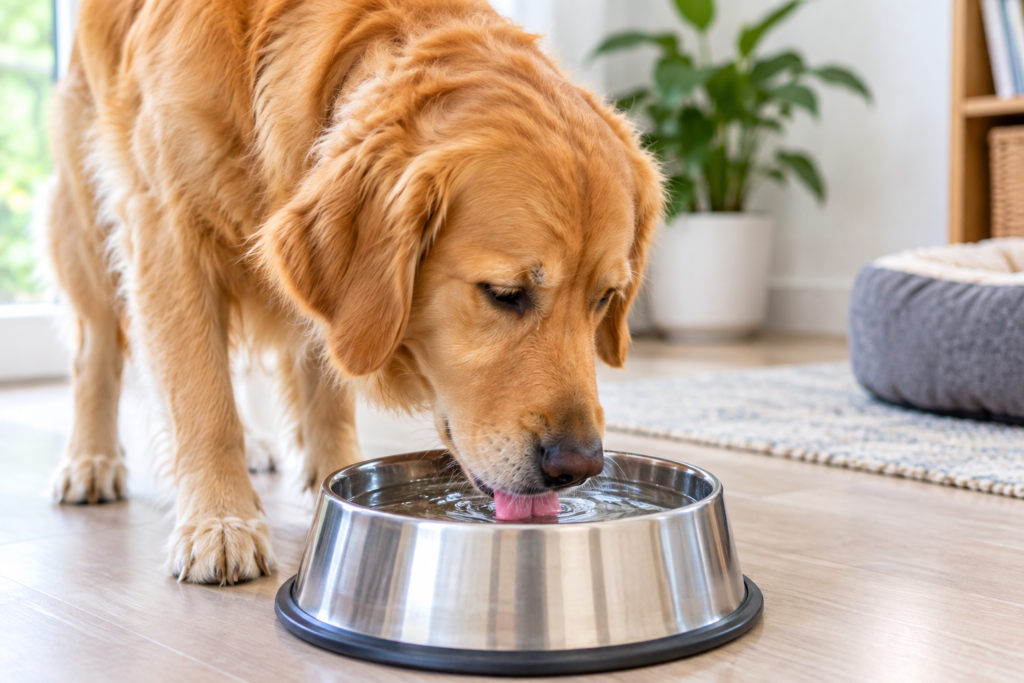
Have you noticed your dog’s water bowl going empty faster than Have you noticed your dog’s water bowl going empty faster than it used to? Maybe your pup is asking to go outside more often, or you’re refilling the water dish two or three times a day when once was plenty. If you’re asking yourself, “why is my dog drinking so much water lately,” this blog will help you find an answer to your question.
Excessive thirst in dogs, also called polydipsia, is one of those symptoms that’s easy to brush off. But in many cases, it’s your dog’s way of telling you something is going on beneath the surface. In this article, the team at Erin Centre Animal Hospital walks you through the most common causes of increased water intake in dogs, the signs that mean it’s time to call your vet, and simple ways to track your dog’s drinking habits at home.
How Much Water Should a Dog Drink Each Day?
A healthy dog typically drinks about one ounce of water per pound of body weight each day. That works out to roughly 4 cups of water for a 30 pound dog. That number can shift depending on a few normal factors, including:
How active your dog is
The weather and time of year
Whether your dog eats dry kibble or wet food
Age and general health
If your dog’s water intake has gone up noticeably over the last several days, it’s worth taking a closer look rather than assuming it will pass on its own.
Common Causes of Dogs Drinking Too Much Water
A Change in Diet
Switching from wet food to dry kibble can cause a dog to drink more water naturally, since kibble contains much less moisture than canned food. This is usually nothing to worry about.
Warm Weather or More Exercise
Just like people, dogs get thirstier after a long walk, a game of fetch, or a hot afternoon outside.
Kidney Disease
Kidney problems are one of the most common medical reasons for excessive thirst in dogs, especially in older dogs. When the kidneys can’t concentrate urine properly, dogs end up urinating and drinking more to compensate.
Diabetes in Dogs
Diabetic dogs often show a recognizable pattern of symptoms together: drinking more water, urinating more often, losing weight, and having an increased appetite.
Cushing’s Disease
This condition, caused by high level of cortisol in the body, can lead to excessive thirst along with a bigger appetite, heavy panting, and a rounded, pot-bellied look.
Urinary Tract Infections
A UTI can change how much and how often your dog needs to urinate, which in turn can drive up water intake.
Liver Disease
Since the liver plays such a big role in regulating the body, liver issues can sometimes show up as unexplained thirst.
Certain Medications
Some medications, including steroids and diuretics, list increased thirst as a known side effect.
Pyometra in Unspayed Female Dogs
This is a serious uterine infection that can cause excessive drinking along with lethargy and vomiting. It’s considered a medical emergency and needs immediate veterinary attention.
Signs That Mean It’s Time to Call the Vet
Increased thirst by itself isn’t always an emergency, but you shouldn’t ignore it either, especially if it shows up alongside any of these signs:
Urinating more often or having accidents indoors
Losing weight even though appetite hasn’t changed
Low energy or general weakness
Vomiting or diarrhea
Cloudy or bloody urine
Breath that smells unusually sweet or chemical
A noticeable change in appetite, either more or less than usual
When Should You Take Your Dog to the Vet for Drinking Too Much Water?
A good rule of thumb: if your dog has been drinking noticeably more water for more than two or three days, or if any of the symptoms above show up, it’s time to schedule a vet visit.
When you bring your dog to Erin Centre Animal Hospital for excessive thirst, our veterinary team will generally:
Ask detailed questions about your dog’s water intake, diet, and any recent changes in behavior
Perform a complete physical exam
Run bloodwork and a urinalysis to check kidney function, blood sugar levels, liver enzymes, and more
Recommend further testing, such as imaging, if needed to get to the root cause
Catching these conditions early makes a real difference. Diseases like diabetes and kidney disease are much easier to manage, and your dog has a much better chance of living a full, comfortable life, when the problem is caught early rather than later.
How to Track Your Dog’s Water Intake at Home
- Measure how much water you pour into the bowl each morning and check how much is left the next day
- Keep a simple written log for about a week
- Pay attention to how often your dog needs to go outside to urinate
- Write down any other changes you notice, even small ones like lower energy or pickier eating
Bringing this information with you to the appointment helps your vet figure out what’s going on much faster.
The Bottom Line on Excessive Thirst in Dogs
A dog drinking more water than usual doesn’t automatically mean something serious is wrong, but it’s not a symptom to ignore either. Since increased thirst can point to anything from a simple food change to a more serious health condition, the safest choice is always to have your dog checked out by a veterinarian you trust.
If you’ve noticed a change in your dog’s drinking habits, reach out to Erin Centre Animal Hospital to schedule an appointment. Our team is here to help you find answers and keep your dog happy and healthy for years to come.
Frequently Asked Questions
Why is my dog drinking so much water all of a sudden?
A sudden increase in water intake can be caused by simple things like hot weather, more exercise, or a switch to dry food. It can also point to underlying conditions such as kidney disease, diabetes, or a urinary tract infection. If the change is sudden and lasts more than a couple of days, it’s worth having your dog checked by a vet.
How much water is too much for a dog to drink in a day?
As a general guideline, dogs drink about one ounce of water per pound of body weight per day. If your dog is drinking noticeably more than that on a regular basis, or you’re refilling the bowl far more often than usual, it’s considered excessive thirst and should be investigated.
Is excessive thirst in dogs always a sign of a serious illness?
Not always. Hot weather, increased activity, and dietary changes can all cause temporary increases in thirst. However, excessive thirst combined with other symptoms like weight loss, increased urination, or low energy is more likely to signal an underlying health issue that needs veterinary attention.
What diseases cause a dog to drink more water?
The most common medical causes include kidney disease, diabetes mellitus, Cushing’s disease, liver disease, and urinary tract infections. In unspayed female dogs, a uterine infection called pyometra can also cause excessive drinking and requires emergency care.
Should I limit my dog’s water intake if they’re drinking too much?
No. You should never restrict your dog’s access to water, even if they seem to be drinking more than usual. Limiting water can be dangerous, especially if the increased thirst is caused by an underlying medical condition. Instead, monitor the amount and talk to your vet as soon as possible.
When should I take my dog to the vet for drinking too much water?
If your dog has been drinking noticeably more water for more than two to three days, or if you notice other symptoms like weight loss, vomiting, or lethargy, it’s time to schedule a vet visit. Catching the underlying cause early usually leads to better outcomes.